Posts Tagged ‘Quirky University’

  • Mon, Jan 21 2013

    Unless it’s designed for entertainment, every product concept boils down to two main elements: the problem it’s trying to solve, and the way it’s trying to solve it. While finding and designing the solution is undoubtedly the hard part, designers will often jump to this stage prematurely, overlooking key aspects of the problem that may be crucial to the design process. Remember, a solution is only as compelling as the obstacle it’s addressing, so if you misunderstand the problem, or misjudge demand for a solution, no amount of research and design work will make the product a success.

    In some cases, understanding the problem is as simple as defining your goals. Rather than saying “such-and-such process is hard, I’m going to make it easier”, take the time to identify those elements that you want to improve. Scores of inventors have tried to improve the process of brushing with a paste-dispensing toothbrush, but few actually examined what this feature would be doing. Consider: it takes all of two seconds to apply toothpaste to a toothbrush, and since integrated toothpaste would require frequent refilling, unclogging, and cleaning, the proposed solution actually seems more troublesome than the status quo. While there are many ways that the brushing process can be improved, this is decidedly not one of them, and recognizing that is half the battle.

    Good god.

    In other cases, inventors will hear about a problem and immediately pursue a solution, without taking the time to determine how widespread or serious the problem really is. Quirky may love your design for a floating, waterproof iPad stand, along with your bath-crazed neighbor who inspired the idea, but we can’t manufacture and sell it without widespread demand from the consumer market.

    Thus, if you’ve identified an intriguing problem, and would like to invent a solution, online research should be your first serious step. Friends and neighbors may sugar-coat their feedback to avoid awkwardness, but online communities will be much more honest and direct, so ask about the problem on specialized forums or message boards to see what the experts think (e.g. Home-Barista.com would be the go-to site for any coffee-related product). Not only will you get confirmation that the problem is valid, but you will also better understand the nuances and components of the problem itself, resulting in a more comprehensive, informed solution. Knowledge, after all, is power.

    Past Design Tips:
    Sweat The Small Stuff
    Dieter Rams And The Ten Design Commandments
    Reflect On Your Work

  • Fri, Jan 18 2013

    If I had a nickel for every time a community member told me “I see so many great ideas not getting picked by Quirky,” I’d have at least a dollar. But seriously, to anybody who says “I see so many great ideas not getting picked by Quirky,” let me assure you: we saw those ideas too.

    So why might an idea you think is great not be placed under consideration, chosen for live product evaluation, or picked for development? Let me run through a few of the most common reasons Quirky doesn’t move an idea forward.

    It Already Exists
    By far, the number one reason Quirky doesn’t move an idea forward is that the product already exists, in one form or another. I cannot overstate how important it is to conduct market research to ensure that your idea hasn’t already been made into a consumer product. One time, I took a random sampling of ideas from the list of active submissions, and 7 out of 10 of them failed on this basis. These were ideas with high vote counts and attractive presentations. However, the products existed (in fact, a couple of them were already in the Quirky shop). If you’ve ever received an email from me, you know my signature includes the definition:

    in·ven·tion
    noun
    1 : an original device or process
    2 : the act, process, or power of inventing

    Note the word “original.” If it is being sold, or if someone online has already rendered the product, we are inclined to stay away from it.

    There are a lot of people in the world thinking about problems and solutions. No matter how original and creative you think your idea is, it is quite possible that someone else already had it. Please do take the time to find out.

    Overcrowded Market
    Closely related to the “already exists” fail, an overcrowded market means that the exact product proposed may not exist, but that there are many products that attack the same problem in slightly different ways. It’s certainly possible that Quirky will take a crack at a crowded market if our team thinks a solution is particularly brilliant and unique, but most of the time we just skip over minor changes to existing product spaces. Again, my number one piece of advice to the prospective Quirky inventor is to understand the competitive landscape really, really well, and then do more research. My wish list of research every ideator should do before submitting includes:

    - Google search
    – Amazon search
    – Patent search
    – Quirky search

    It is tempting to write “Nothing like it” in the Product Comparison section of a submission, but the truth comes out eventually.

    Not A Big Enough Problem
    It’s easy to encounter a problem and think a solution needs to be invented for it, but it’s important to consider whether or not it is widely suffered and if so, how it is currently addressed. We receive tons of ideas that solve incredibly minute dilemmas, which if brought to Eval would earn Bill’s famous “juice is not worth the squeeze” appraisal. As I stressed above, make sure to do your market research before submitting an idea – you may discover that existing solutions do the job better.

    Closely related: Too much solution for too little problem. We aren’t interested in Rube Goldberg-esque machines that automate tasks not exactly begging for automation. Well, we find such inventions interesting, but we aren’t likely to build them.

    No Invention
    We get a lot of submissions that are attractive and appealing, but are not inventions. We’re not interested in making action figures, unless they are reinventions of the action figure.

    Not A Physical Consumer Product
    We don’t make standalone apps (as opposed to apps incidental to app-enabled products) and we’re not focused on industrial processes, legislation, promotions or anything else that isn’t a physical consumer product.

    Unfit For Retail
    Quirky is an invention machine, but one that specializes in certain types of inventions. While we geek out at ideas for new wind turbines and electrical grids as much as the next nerd, we have nowhere near the capacity to make either. As I mentioned in reason #5, we’re looking for physical consumer product inventions, so ask yourself “can I see this on a shelf my favorite retailers?”.

    Not Physically Possible
    Sometimes this is obvious: no perpetual motion machines. Other times submissions simply misunderstand the capabilities of solar tech, magnetism, suction, or other current engineering. We are trying to provide some background on these technologies, so please follow the blog for more posts on this subject.

    Resubmitted Without Change
    I know, there is always the hope that if you resubmit an idea over and over again, someone at Quirky will see it and like it. This may have been true at one point, but it is becoming less and less likely as we focus our idea review, and the same people are looking at the same categories each week. If you’re resubmitting an idea, it should be improved in some way from the previous iteration of the idea.

    Line Extension When There Is No Line To Extend Yet
    Our general rule is that we don’t develop line extensions (or accessories) to a product line until the product is shipped, in stores and selling through.

    Remember that Quirky is an evolving company. We look to move forward and increase the complexity, ambition and diversity of our portfolio of products. So if you’re looking at what we’ve done in the past and trying to emulate that, you’re missing out on our vision and direction. The best product idea you can submit is one that convinces us to take a step forward outside of our comfort zone. Sure, we will always be interested in a great, simple solution that we can design and engineer and add to our portfolio. But what gets us really excited is the new stuff. As an aside, more complex products tend to sell for more money at retail, so your share of influence on a $50 or $100 product is going to be worth a lot more than that same share of a $3.99 product.

    A word about the way I personally think about ideas during the pre-evaluation phase: I look for game changers. A game changer can reveal its game-changing nature in a big or small way. It doesn’t have to be faster-than-light transport or artificial intelligence. To me, a new way to grate cheese can be a game changer for people who grate a lot of cheese (that’s just an example — I actually think the cheese grater category is profoundly saturated). I look for ideas that make me wonder, “Why didn’t I think of that!”

    Also, a word of advice to frequent inventors: sometimes less is more. I think it’s more productive to develop the heck out of a few strong ideas than to submit a sketchy outline of every idea that comes to mind.

    Finally, I should add: Yes, sure, we know that some things slip through the cracks. It’s entirely possible that an existing product — especially if it is being made by an obscure producer and not well publicized or distributed — can make it through Eval. But why would you want to invest your time in such an endeavor? And these occurrences will become less and less common as Quirky’s capacity increases. As we see better and more original ideas, they will crowd all lesser ideas out of the Quirky ecosystem. So if you want your ideas to have a place, make it truly original.

  • Thu, Jan 17 2013

    When you open up the Quirky submission page, the very first section you are asked to fill out is the 140-Character Idea Description. As the shortest part of your product pitch, this step is often dismissed as quick and easy, but looks can be deceiving. While the description may be no longer than a tweet, it’s the first thing that people see when viewing your submission, and the only text they’re exposed to when browsing through active ideas. Thus, it’s important to take the time to craft a solid 140-character description, as this is the component that will drive people to look at the rest of your submission— or not. Since everyone can’t be a copywriter or certified wordsmith, here are a few tips to keep in mind.


    Before All Else, Be Descriptive
    Because a Quirky idea submission is positioned as a pitch, it’s very easy to get wrapped up in creative ways to market your product. Rhetorical questions (“don’t you hate…”), calls to action (“hey, let’s revolutionize…”), and qualifying statements (“Kids love iPads…”), all seem like compelling ways to draw attention to your idea, but you can’t forget that the most important factor considered by Quirky is the product concept itself. At the end of the day, anyone can claim that their product will be revolutionary, or that the market potential is huge, but no one can fabricate the core quality and value of a product. If you convey the problem you’re trying to solve, along with your proposed solution, most consumers (especially the experts on the Quirky staff) will be able to deduce its potential impact for themselves.

    First and foremost, the role of the 140-character idea description is to tell what the idea actually is. In this case, clearer is always better: don’t just relate that your product is a “better, faster” ice cream scoop, but make sure that the viewer understands WHY it’s better and faster. Of course, the description is rather limited in length, so you may not always have room for to fully explain the problem, or to explain why the product is unique. However, if you manage to describe the product and what it does, those 140 characters have done their job. Here are two examples of selected product submissions that featured excellent descriptions:


    Draw Attention to Assets
    While the most important elements of a product pitch are the description and concept images, a submission may contain other compelling assets that the viewer might not notice at first glance. Embedded videos, a custom prototype, or a demonstration of a working prototype are all inconspicuous elements that can lend some serious weight to your submission. Thus, if you have the space, it’s worthwhile to briefly acknowledge the presence of a video, prototype, or other valuable asset that may not be evident on the Participate page.

    If an idea is being resubmitted, updates and changes to your submission would fall into this category as well. It may take a few more characters, but if you have the room, it helps to briefly address what is different, so that repeat viewers do not immediately dismiss it without a closer look. “Resubmitted with video”, “Resubmitted with simpler design”, and “Resubmitted with better scraper” are all examples of how this can be done.


    Proofread Like It’s Your Job (Because It Is)
    Really, we cannot stress this enough. The easiest way to derail a quality submission is to rush the description and miss a key typo: nobody wants a product that helps detect “beast cancer”. Before finalizing your description, be sure to double-check your work to ensure that there are no mistakes, and to make sure that your phrase structure makes sense. Since you’re only working with 140 characters, you don’t have to use complete sentences, but you want to make sure that your chosen words convey the idea clearly. Here are two examples  of descriptions that clearly communicate the idea in question, even without complete sentences:

    Also, as a final note: please, PLEASE AVOID TYPING IN ALL CAPS. We’re pretty sure a puppy dies every time that happens.


    Final Touches
    While we may place great emphasis on clear, effective product descriptions, we aren’t named “Quirky” because of a nervous tick, so this emphasis should not be misconstrued as a dislike of cool and creative idea descriptions. So long as your description conveys the product concept clearly, there’s nothing wrong with instilling your own personal or creative touches. In short, feel free to have fun. Adding a bit of humor or a personal anecdote is a great way to endear the viewer to a product concept. Suggesting a potential name can also be effective: while there are some concerns about the propriety of submitting a name, since product naming is handled during the development process, it can’t be denied that a cute or clever name can help a product stand out in a reader’s mind. Some names, such as Rake N’ Tamp, were so catchy that they were eventually chosen for the final product as well. We love it when a plan comes together.

    Other Articles in This Series:
    Crafting Your Idea Submission: The Basics
    Crafting Your Idea Submission: Research, Research, Research
    Crafting Your Idea Submission: Add Some Character
    Crafting Your Idea Submission: The Power of Visuals

  • Mon, Jan 14 2013

    During a 2003 interview with Rolling Stone magazine, the late Steve Jobs shared a particularly potent piece of advice passed on from his father, a mechanic and carpenter:

    “When you’re a carpenter making a beautiful chest of drawers, you’re not going to use a piece of plywood on the back, even though it faces the wall and nobody will ever see it. You’ll know it’s there, so you’re going to use a beautiful piece of wood on the back. For you to sleep well at night, the aesthetic, the quality, has to be carried all the way through.”

    This particular insight played a crucial role in shaping Job’s design process, perhaps more than any other. During his tenure as CEO of Apple, Jobs advocated and enforced a nearly fanatical attention to detail amongst Apple’s designers, demanding that every product component be masterfully crafted, regardless of its size or significance. He insisted on an exquisitely-etched Apple logo for Apple’s “Sunflower” iMac G4, in spite of the logo’s inconspicuous nature, and he regularly asked engineers to rework and refine the aesthetics of internal circuit boards, even though the components might never be seen by the consumer. While aesthetics are a key component of Apple’s design ethos, this fine-tuning was not only intended to impress consumers who might actually deconstruct an Apple device. Rather, Jobs firmly believed that a true craftsman had to respect every component of a design to truly respect the device, and that an emphasis on leaving no detail behind would ultimately lead to better products.

    Now, the Quirky development process is a collaborative one, so this advice should be taken with a grain of salt: no one expects you to map out every nook, cranny and circuit board before submitting your idea. However, when you are working on a concept sketch, it’s important to devote your attention to every part of the product —every button, handle and surface— and not just the parts that you feel are important. The main innovation of Thor may be in the double-bladed head, but Quirky’s design staff spent just as much time ensuring that the handle grip was both effective and ergonomic. The result is a product that provides an all-around exceptional experience: apply that same attention to each individual component of your next product design, and you may be pleasantly surprised by the result.

    Past Design Tips:
    Dieter Rams And The Ten Design Commandments
    Reflect On Your Work
    Know What’s Possible

  • Mon, Jan 7 2013

    While you may not have heard his name until now, few industrial designers cast a bigger shadow over the discipline than German-born Dieter Rams. Widely considered to be one of the century’s greatest designers, Rams served as Chief of Design for the German electronics brand Braun from 1961 until 1995, where he cultivated a reputation as one of the industry’s most forward-thinking members. In the realm of design philosophy, he has served as a pivotal supporter of minimalist design, basing much of his design approach on the phrase “Weniger, aber besser”, which translates to “Less, but better”.

    This core philosophy came to define much of his work for Braun, along with his extensive work with British furniture company Vitsœ (which produced his iconic 606 Universal Shelving System). In an 1989 interview with Taz Magazine, he discussed the impact of minimalism on both himself and Braun, saying: “We are economical with form and colour, prioritize simple forms, avoid unnecessary complexity, do without ornament. Instead [there is] order and clarification. We measure every detail against the question of whether it serves function and facilitates handling.”

    Rams and his team have designed more than 500 products over the course of his career, ranging from coffee makers to radios.

    As part of his constant quest for self-improvement, Rams found himself frequently asking: “is my design good design?” By answering this question over and over, he crafted a list of ten fundamental design principles, which can be applied to any product category. If you’re working to cultivate your design chops, we recommend keeping them close at hand:

    Good Design Is Innovative: The possibilities for innovation are not, by any means, exhausted. Technological development is always offering new opportunities for innovative design. But innovative design always develops in tandem with innovative technology, and can never be an end in itself.

    Good Design Makes a Product Useful: A product is bought to be used. It has to satisfy certain criteria, not only functional but also psychological and aesthetic. Good design emphasizes the usefulness of a product while disregarding anything that could possibly detract from it.

    Good Design Is Aesthetic: The aesthetic quality of a product is integral to its usefulness because products are used every day and have an effect on people and their well-being. Only well-executed objects can be beautiful.

    Good Design Makes A Product Understandable: It clarifies the product’s structure. Better still, it can make the product clearly express its function by making use of the user’s intuition. At best, it is self-explanatory.

    Good Design Is Unobtrusive: Products fulfilling a purpose are like tools. They are neither decorative objects nor works of art. Their design should therefore be both neutral and restrained, to leave room for the user’s self-expression.

    Good Design Is Honest: It does not make a product more innovative, powerful or valuable than it really is. It does not attempt to manipulate the consumer with promises that cannot be kept.

    Good Design Is Long-lasting: It avoids being fashionable and therefore never appears antiquated. Unlike fashionable design, it lasts many years – even in today’s throwaway society.

    Good Design Is Thorough Down to the Last Detail: Nothing must be arbitrary or left to chance. Care and accuracy in the design process show respect towards the consumer.

    Good Design Is Environmentally Friendly: Design makes an important contribution to the preservation of the environment. It conserves resources and minimises physical and visual pollution throughout the lifecycle of the product.

    Good Design Is as Little Design as Possible: Less, but better – because it concentrates on the essential aspects, and the products are not burdened with non-essentials. Back to purity, back to simplicity.

    If you’d like to learn more about Dieter Rams and his design ethos, there is a wealth of material available on the web, but this in-depth interview with Co.Design is a great place to start!

    Past Design Tips:
    Reflect On Your Work
    Know What’s Possible
    If It’s Worth Making, It’s Worth Making Beautiful

  • Mon, Dec 31 2012

    In the world of invention, it’s natural to keep your eyes keenly trained on the future. However, every once in a while, it helps to take a moment to step back, regroup, and review the things you’ve accomplished so far. Like a writer unwilling to read his past work, it can be difficult to train a lens on your past endeavors (“oh gosh, did I really say THAT!?”), but if you power through that pit in your stomach, you’ll find that the benefits more than make up for the awkwardness. For one, reflection enables you to identify past mistakes and successes, and to observe how you learn and grow, both as a person and as a designer. You’ll recognize the things you did well, and the skills you improved, along with those skills you’ll need to focus on improving over the coming year. You’ll identify trends in your work flow, and ask questions about your habits that you may not have considered in the moment. “Do I stick to the same type of product?”, “Has my drawing improved?”, “Are my submissions clearer now than they were in February?”: these are questions that don’t often come naturally, but which can lead to enormous strides forward if you’re willing to ask them.

    After you’ve recovered from your New Year’s Eve hangover, we’d encourage you to take a moment to examine your year in review (and what a year it’s been). As a company and a community, we’ve accomplished some amazing things, and looking back on those achievements really emphasizes what a passionate group of die-hard makers can do when the put their minds to it. Here’s a quick look at some of the things we pulled off in 2012:

    - We made Crates in 100 days, and we made them here.

    - We teamed up with GE to reinvent the milk jug.

    - We raised a little cash, no big deal though.

    - We brought the world 12 new simple solutions.

    - We designed a line of iPhone 5 accessories in 24 hours.

    - We announced a brand new take on retail.

    - We brought Santa’s QuirkShop to the streets of NYC.

    - We went to space, and returned to tell the tale.

    Thank you to each and every one of you for making these incredible achievements possible: if this is what we were able to accomplish in 2012, then 2013 is looking very bright indeed. Stay safe, and stay quirky: we’ll see you next year.

    Past Design Tips:
    Know What’s Possible
    If It’s Worth Making, It’s Worth Making Beautiful
    Keep Your Finger On the Pulse
    Be Water, My Friend

  • Mon, Dec 24 2012

    When minds and eyes are kept open, human beings will almost instinctively seek out solutions to the everyday problems they encounter. However, thinking up a solution and making it a reality are two very different things. Oftentimes, inventors will submit ideas to Quirky that appear to have potential, only to learn that they are ultimately unviable, due to the inventor’s limited understanding of the technology involved. A solar-powered iPhone case may be cool in theory (who wouldn’t want a phone that charges itself?), but a solar panel the size of an iPhone would not generate nearly enough power to charge the device effectively.

    Now don’t get us wrong, this doesn’t mean that you need to be an electrical engineer to be a successful inventor at Quirky. However, a basic knowledge of the fundamentals can ensure that you never have to worry about viability when submitting a concept: after all, nothing ends a product evaluation faster than finding out that the proposed concept wouldn’t work.  Ultimately, different inventors will have to tailor their research to the type of products they’re designing, but here are a few pointers in areas where people commonly go awry.

    USB Power
    Consumers are spending more time at their computers than ever before, and with USB being the universal means of computer-based charging, Quirky has seen a wave of USB-powered accessories ranging from hand warmers to desktop hot pots. However, while we hate leaving our desks as much as the next person, it’s important to understand just what kind of device a USB port can reasonably power. For reference, the standard power rating for a USB port is 5V 500mA (500 milliamps, or 0.5 amps), enough to charge the standard smart phone. If a USB-powered device requires more juice, the insufficient amperage won’t cause any damage, but the product will charge/function at a reduced rate, or in some cases may not function at all. Thus, if you’re designing a product that relies on USB ports for power, your first task should be to determine whether a USB can properly charge it in the first place. There are online resources out there that list the required amperage for basic devices and appliances, but since Amperage = Watts divided by Volts, you can also calculate amperage by dividing the product’s wattage by either 115 or 230 volts, depending on which voltage the appliance uses.

    Solar Power
    While USB power may be the average inventor’s latest crush, solar power is undoubtedly his lifelong darling. Over the past three years, Quirky inventors have submitted concepts for every solar-powered device imaginable, from GPS-locator stamps to electric camping stoves. The ability to charge a device anywhere is understandably alluring, but the unfortunate reality is that current solar tech is focused more on limitations than possibilities, so it’s important to understand just how much juice you can squeeze from a panel before finalizing your solar submission. This can be very difficult to determine, since solar panels vary widely in both size and efficiency, but if you’d like to generate some ballpark figures to test viability, you can use a handy solar calculator to crunch the numbers. The calculator is designed to help determine solar panel requirements for homeowners, so it’s not optimized for industrial design, but it serves our purposes well enough if you can keep your numbers straight.

    Using this tutorial as a guide, you should be able to fill in the calculator’s first five number fields (#3, #6, #12, #14, #18 and #22), dictating how much power the device you’re designing will need, and how much sunlight it’s liable to get. After this is done, you’ll need to fill in the final number field (#25), which is the size of the solar panel you’d like to use, measured in wattage. Since the average 12 volt solar panel generates about 70 milliwatts per square inch, multiply the size of your intended solar panel in square inches by (.07) to determine the wattage of the solar panel. Thus, a 10”x 20”solar panel (200 square inches) would be approximately 14 watts, give or take.

    Once all of these numbers are entered, the value of field #31 should be around 1, meaning that one solar panel of your chosen size could power the device properly. However, if the number reaches 1.5 or above, that means that you would need multiple solar panels of that size to power the device, requiring that you add more solar panels to your design, or scrap the project altogether. All in all, the calculations can be a bit daunting, and you may have to do a little Wikipedia research on electronics, but no one said this stuff would be easy!

    Materials and Manufacturing
    Not all devices require electricity, but even the simplest product has to be made of something, so it’s essential for any inventor to understand the properties of common design materials. If you’re working on a product concept, especially one that relies on a specific material, be sure to double-check your chemistry to ensure that the materials involved will have the desired effect. For example, while silicone may be somewhat heat resistant, that doesn’t mean it will be cool to the touch after 15 minutes in an oven. Material ConneXion is by far the most expansive and comprehensive material library out there, but if you’re not interested in paying the yearly subscription fee, the Materia database is nearly as useful, and is free to use. You could also go the fully-analog route by buying a book: Industrial Design: Materials and Manufacturing Guide not only covers basic materials, but manufacturing techniques as well, ensuring that your designs will be optimized not only by material, but by manufacturing technique as well.

    Past Design Tips:
    If It’s Worth Making, It’s Worth Making Beautiful
    Keep Your Finger On the Pulse
    Be Water, My Friend

  • Tue, Dec 18 2012

    If we had to guess, the person who coined the phrase “a picture is worth a thousand words” was probably a designer. While it’s possible to have an invention selected on Quirky without an image, few things make an invention concept clearer and more compelling than a really solid visual. Bringing your idea to life through a picture not only makes it easier for viewers to understand what you’re going for, but it helps them visualize themselves using the product in their daily lives, increasing their desire to see it on store shelves. After all, how much cooler was Pivot Power after you saw it in the act of taming adapters?

    Now, chances are that some of you have artistic experience, in which case this article is probably old news. However, if you’ve never picked up a pencil in your life, don’t worry! You don’t need years of lessons and design school chops to make a convincing product drawing. All you need are the right tools, and a push to get you started. For convenience, we’ve compiled both below:

    Sketching

    For most inventors, especially those on Quirky, the concept of sketching inspires images of carefully crafted design sketches, intended to show a product in all its multi-faceted glory. This is a tried-and-true method of putting product concepts on paper, and if you’re willing to put in the work, there are a tons of great resources out there to get you on your way to sketching nirvana. This list of basic sketching guidelines is a great place to start, and there are a number of books on the market that will give you a run-through of the fundamentals (we’d recommend Sketching: Drawing Techniques for Product Designers, or Sketching: The Basics).

    That being said, if this is starting to sound like too much work, there are ways for even novice artists to leverage the power of sketching in a submission. On top of fleshing out your product’s form on paper, you can also illustrate scenarios in which the product would come in handy. The above sketch for the 4-in-1 segmenting flashlight may not be fancy, but it did a great job of illustrating the invention’s usefulness, and played a large role in the Quirky preval committee’s decision to move this product to Eval.


    Digital 2D

    While physical sketching may be the inventor’s most accessible art form, some people just don’t mix with a pencil and paper. That’s not a problem though, because there are several free, intuitive sketching programs that you can use to bring simple images to life in no time at all. If you use a computer with Microsoft Windows, MS Paint would be your go-to software, but OSX users can download Paintbrush for roughly the same experience (both programs are free to download and use). While the capabilities of these programs are limited, they provide an effortless means of getting your ideas into the visual realm, with no training or expertise required. The Pivot Power above, while hardly a Rembrandt, was drawn by a novice in under 10 minutes. Furthermore, because the images are digital from the get-go, you won’t have to find a scanner or camera to upload your image to the Quirky site. Easy as you like.


    Digital 3D

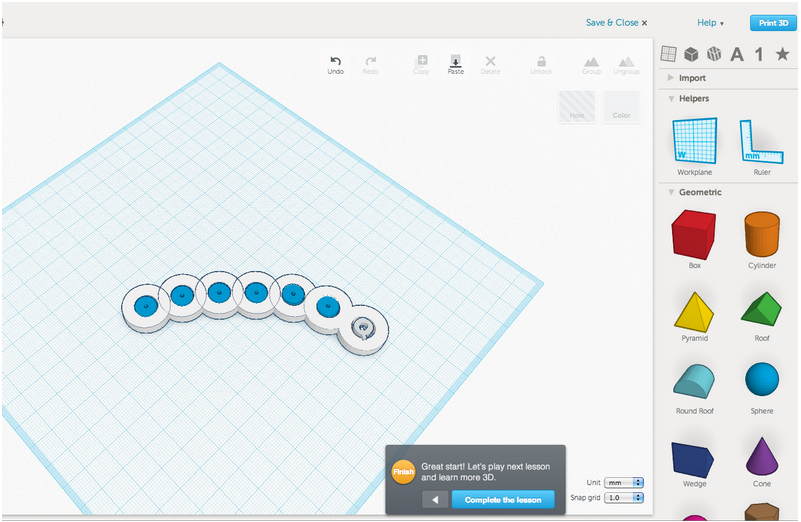
    While an image’s most important function is to clearly depict a product’s form, we can’t deny that a flashy, eye-catching image is appealing in its own right. If you’re looking to upgrade the quality of your renders, why not try taking them into three dimensions? Advanced rendering programs like AutoCAD may take years of training to use effectively, but there are more consumer-friendly programs out there that focus on ease of use, providing simple geometric shapes that act as building blocks for more complex designs. SketchUp has been the go-to industry software for years, but we’re also partial to a newer platform called Tinkercad, which takes accessible modeling to a whole new level: the Pivot Power above was rendered by a new user in five minutes. To learn more about this awesome web platform, check out our full review of Tinkercad on the Quirky blog, written by the Community team’s own Hoon Bae.

    Other Articles in This Series:
    Crafting Your Idea Submission: The Basics
    Crafting Your Idea Submission: Research, Research, Research
    Crafting Your Idea Submission: Add Some Character

  • Mon, Dec 17 2012

    Traditionally, the phrase “form follows function” encourages the idea that an object’s shape should be derived from its function, rather than some unrelated source. However, far too many inventors take this to mean that an object’s aesthetic is unimportant compared to its functionality, which is absolutely not the case. While the average product may be a tool designed to perform a task, it should also be considered a piece of art. Displayed on a shelf or counter, it is a visual representation of the owner’s style and sensibilities; one that can inspire an emotional bond as strong as the most moving masterpiece. So if you’re sitting down to sketch up concepts for your next great invention, don’t just think about how to make it work, but how to make it work beautifully as well. A visually-pleasing design can make a product far more compelling and memorable, giving it an edge over purely-functional products with a blander, more industrial look.

    Now, contrary to popular belief, you don’t need a background in visual arts or design to craft something beautiful. The four-sided kitchen timer and Cocodrillo desk organizer are two invention ideas that accomplish their tasks in a unique and elegant way, and each could have been drawn out with just a pencil and ruler. Furthermore, you should feel free to draw inspiration from anyone and anything: the iPhone 5 case Pli was crafted as an homage to mid-century modern design, while the cardboard cutter Box Bug (pictured below) is intended to resemble an insect, complete with eyes and antenna. When you sit down to start sketching, take a few minutes to brainstorm some of the styles and images you want your product to evoke. Then, try to incorporate some of those elements into your design. Box Bug is a great example of this; as a child safety tool, it is supposed to inspire a sense of harmless whimsy, making a cute little bug a perfect source of inspiration.

    Admittedly, designing more beautiful products is one of those things that’s easier said than done, especially for a beginning designer. The best way to get started is to simply immerse yourself in beautiful design: Design Milk, Incredible Things and Bless This Stuff are three blogs you can count on for a daily dose of product splendor. Once you’ve grown accustomed to the content that’s out there, you can apply this practice to specific projects by creating inspiration boards, collections of images and products that serve as creative stimuli for a design. The Quirky Design Staff has posted a number of their own inspiration boards on Pinterest: in addition to the board for Box Bug, you can check out boards for the Loft hanging cookware set, the Aria reinvented fan, and more.

    If you’re feeling ambitious (and a tad bit abstract), you can also draw inspiration from more conventional artwork. The influence here would be much less direct, but the right painting or sculpture can provide stylistic input on the kind of feeling or atmosphere you want the product to rouse. For example, when designing the giant robots and monsters for his upcoming film Pacific Rim, Guillermo Del Toro took more than a few cues from the painting The Colossus, traditionally attributed to Francisco de Goya.

    At the end of the day, beauty IS in the eyes of the beholder, so every designer will have his or her own aesthetic inspiration. The important thing is to always keep beauty in your minds eye: if a product functions, but is made ugly as a result, then it’s really only half complete.

    Past Design Tips:
    Keep Your Finger On The Pulse
    Be Water, My Friend
    Think Simple

  • Tue, Dec 11 2012

    With 314,000 members and counting, it’s safe to say that we get a lot of repeat submissions at Quirky. So many, in fact, that this is the second time we’ve written this article. With so many ideas coming through the site, it’s inevitable that some will try to solve the same problem with similar solutions, but on top of the similars we get by coincidence, there are certain basic concepts that we see submitted time and time again, without ever being selected. While the reasons we turned them down might be plain to the staff here at QHQ, they might not be as clear to a first-time inventor, so we’ve gathered a few of our more frequent flyers to try and explain why we keep seeing them, and why we keep turning them down.

    Toilet Seat Lifter

    Why We Like It: As evidenced by our extensive line of cleaning products, sanitation is a huge motivator for consumers, and there is no greater enemy to health and hygiene than the germ-encrusted toilet. It’s a profoundly dirty device that we still use each and every day, and this relationship has inspired products ranging from disposal seat covers to better toilet brushes. Since lifting/lowering a toilet seat is as disgusting as it is necessary, it stands to reason that a hands-free solution would be appealing.

    Why We Haven’t Picked It: Now, we could offer the argument that versions of this product already exist (depicted above), and leave it at that. However, there’s a reason that we haven’t seen these concepts break into widespread production. While lifting/lowering a toilet seat is something that people do quite frequently, it’s normally a one-second task that barely merits a thought. Furthermore, it’s a problem so simple that it can be bypassed by gripping the seat with a little square of toilet paper. This means that an effective solution would have to be both compact and easy to use/install, which most toilet seat lifters are decidedly not. We’re not saying that the concept doesn’t have merit, but at the end of the day, it’s a classic case of “too much solution” for “not enough problem”.


    Sunscreen/Lotion Back Applicator

    Why We Like It: Somewhere, at some point in history, a scientist has published a paper about the anatomical impossibility of touching every spot on your back. Whether you’re applying lotion at home or sunscreen on the beach, it’s nearly impossible to ensure that your entire back is covered, which can lead to some hilarious consequences. To date, no widespread solution has been presented, leaving this common and awkward problem in dire need of correction.

    Why We Haven’t Picked It: While we agree that sunscreen application is a problem, we don’t agree that a bulky, obvious applicator is the solution. Most applicators submitted to Quirky resemble a loofah on a stick, and while they do address the issue at hand, they would also take up a lot of space: far more than a bottle of sunscreen alone. For a non-essential tool that would either be carried to the beach, or stored as one of many gadgets in a bathroom cupboard, this large size is simply a dealbreaker. If an effective, enduring applicator is eventually found, it will have to be small enough for consumers to carry around without noticing that it’s there. Otherwise, the problem just isn’t large enough to merit a distinct product solution.


    Better Pooper Scooper

    Why We Like It: Poop is gross. That, friends, is an inexorable fact of life. Therefore, it’s not hard to imagine why dog owners cringe at the thought of cleaning up after their furry friends, and why they are constantly searching for a better way to do it. From mechanical claws to mini-rakes, the pet market is flooded with a curious variety of poop-slaying tools, which are admittedly as fun to design as they are to use.

    Why We Haven’t Picked It: While we generally approve of inventors striving to improve on the norm, there are times when you have to say “enough is enough”. If you perform a Google search for “pooper scoopers”, you’ll find dozens of different models that are already out there, all of which are designed to accomplish the same simple task in a variety of ways. Inventors may want to develop a solution with less “ick” factor, but you’ll never be able to distance yourself from the fact that you’re handling an animal’s turd. Now, if we ever see a pooper scooper that enables a dog to clean up after itself, THAT might catch our attention.


    “Read In Bed” Stands for the iPhone and iPad

    Why We Like It: While the environment at QHQ is one of constant hustle, most of us are hardcore couch potatoes the moment we get home. Thus, we appreciate any tool designed to perform a task for us, and stands for electronics certainly fit the bill. When you consider that watching a movie is a time-consuming, non-interactive activity, a hands-free stand designed for this task seems like a no-brainer.

    Why We Haven’t Picked It: The answer here is clear and simple folks. The reason we haven’t picked a hands-free iPad stand is that they already exist. In droves. Seriously, if you’re working on a concept in this product sector, you can do a Google Image search for “hands free iPad stand” and find a copy of your exact design. It’s not that the idea is bad, just that someone else got there first.

    To read about more invention ideas that we like, but see all the time, check out the first blog post in this series!

Page 1 of 512345»