Archive for April, 2012

  • Mon, Apr 30 2012

    Justin Giannone is in marketing communications for an electronics distributor. This is his fourth invention idea that will be taken through the Quirky process. Justin says that every time he preps food, his hands get dirty and he has to do a juggling act with paper towels, spices, salt and pepper, utensils, pans, etc. He hates the workflow of gloves and potholders, and finds the majority of the process unnecessary. After much deliberation, Justin thought that it would be a great idea if a product was made that was an easily cleaned, reusable silicone grip that the user could apply to a lot of different things. He even thinks this could be used not only as a grip but a clip, a prop, and a holder among others. Justin and the community believe that there are a lot of uses for a product like this and Quirky agrees. We look forward to working on this project together.


    Paulette Jaques, the inventor of the soon-to-be launched baby gate, is a tutor at an elementary school and a busy mom from New Hampshire. Paulette just loves to come up with new invention ideas and all of her friends and family know this about her, which is why her nephew came to her with a problem he was having.  He found that it was easier to give his kid a water bottle when he was on the go, but in order for kids to drink out of water bottles without spilling, they need to use a straw.  The problem with using a straw is that it can easily fall into the bottle, so he asked Paulette to come up with something to make it easier for kids to drink out of water or juice bottles. Paulette then came up with her bottle straw idea, which is as easy as just adding moldable foam around a straw so that it does not fall into the bottle.  The Quirky staff felt that this was a simple enough idea that could really appeal to kids who are too old to drink from a sippy cup, yet are still having problems drinking out of bottles.


    Vicky Laursen has been living in Denmark for the last 8 years as a nursing student, a volunteer multimedia developer, a website owner and administrator of a social community driven website. One day, when she was making apple turnovers with her kids, she found herself growing frustrated with the dough sticking to the rolling pin.  She started brainstorming how she could fix this problem and get the dough to be less sticky.  It was then that she came up with the idea to have a rolling pin that emits flour.  She figured that integrating a flour sifter that comes out of the two sides of the pin would make rolling any dough easier. The Quirky staff really liked this idea and felt that it is a baking problem that needs to be fixed.

  • Fri, Apr 27 2012

    The creative process is often informed by the things we have seen and experienced over the course of our lifetime. Sometimes, similar designs and concepts can be produced, independently, by two people. When an inventor submits an idea to Quirky, we assume that they are submitting an innovation derived from an original thought, and do not automatically assume that just because there is a similar product or concept out there, that the idea is plagiarized.

    After a review of certain submissions, we found a pattern of ideations that seemed to be heavily inspired by concept art from a single website. Recap appears to be one of these heavily inspired ideations. While we knew that a concept similar to Recap existed when it was picked, we moved forward as we always have in the past, assuming the submitter had not directly appropriated the concept, and that the similarities were coincidental. When we found indications that this might not be the case, we decided it was best to remove Recap from our website and move it out of our development process at this time.

    This is not a decision Quirky has taken lightly. As our company expands, it is important that we do so in a healthy and reputable way. We have made this decision, despite the effort already invested in Recap by the community and staff, to ensure that we continue to collectively design products that offer the highest degree of innovation possible.

  • Thu, Apr 26 2012

    This week marks the anniversaries of the opening days for both the 1939 – 1940 and the 1964 – 1965 World’s Fairs. Both events were cultural achievements in the realms of science, technology, and global citizenship, introducing tens of millions of visitors to cutting edge technological advancements and instilling hope in many for a better future. There is a lot of literature about these fairs and their legacy on the web and in published media, so we won’t be duplicating those efforts. Rather, we’d like to honor them in a popular contemporary fashion: with a Best, Worst, and Ugly list.

    1939 – 1940 World’s Fair


    When you think of a World’s Fair, the images you conjure in your mind are probably from this one. The largest fair in US history, its hopeful theme – the “World of Tomorrow” – was intended to inspire down trodden Americans still reeling from the financial turmoil of the previous six year. The Fair’s exhibitors took full advantage of this direction, constructing awe-inspiring pavilions that housed cutting edge products, technology, and visions of the future.

    The Best: General Motors’ Futurama

    This 36,000 square foot exhibit space was designed to depict the world 20 years in the future, as envisioned by GM and industrial designer Norman Bel Geddes. Visitors were transported over a huge diorama of the United States, as a narrator described this futuristic vision. The features of the diorama gradually grew larger as the audience progressed through it, becoming life sized models of cars, buildings, and city streets. Since GM was the sponsor, the focus of the exhibit were its modeled motorways, which predicted the future of transit and suburban expansion. It envisioned a future utopia regulated by state-of-the-art technology and sophisticated transportation networks, and provided a much needed jolt of inspiration for Americans grappling with effects of the Great Depression. GM would follow up on the success of its 1939 exhibit with an even farther reaching Futurama II in 1964. The sequel was an equally huge success, but focused on Space Travel and simulating visits to the moon.

    The Worst: Smell-O-Vision

    The use of scents to “enhance” films first appeared in 1916 when the Family Theater in Forest City, Pennsylvania treated the audience of a Rose Bowl game to the scent of rose oil. Hans Laube refined scented cinema with his invention of Smellovision — a system of pipes connected to each seat in a theatre and controlled by the projectionist. Laube introduced his invention at the World’s Fair, tickling the olfactory senses of thousands of visitors and predicting a redolent future for film goers. Unfortunately for him, technical difficulties relating to timing, disbursement of scents, and lingering odors made the system more of a distraction than an immersing innovation.

    The Ugly: Elektro and his robot dog Sparko

    In addition to it’s famous time capsules that still sit 50 feet below Flushing Meadow Park, Westinghouse Electric Corporation’s other big showcase in 1939 was Elektro, the United State’s first robot. At 7-feet tall, Elektro could walk by voice command, speak about 700 different prerecorded words, blow up balloons, move his head, arms, and fingers, and most important to the engineers at Westinghouse, smoke cigarettes. All of these features were incredible at the time, but they were housed in the ugliest humanoid body ever. Actually, this is the ugliest humanoid body ever, but Elektro’s was close. The following year Westinghouse introduced Elektro’s motorized companion, Sparko. It could bark, sit, and beg just like a real dog, but looked like a mailbox with legs.

    1964 – 1965 World’s Fair


    Nearly thirty years after fairgoers were introduced to the world of tomorrow, a group of New York businessmen who had attended the 1939 World’s Fair as children decided to give their kids the same opportunity. Thus the 1964 – 1965 World’s Fair was born. This time the fair organizers dropped the thematic focus on technological innovation and a new theme, “Peace through Understanding,” was adopted to reflect a greater focus on world cultures  and global interconnectedness.

    The Best: IBM’s ‘Egg’ Pavilion

    By 1964 IBM was nearly 100 years old and one of the largest technology companies in the world. As a leader in computer technology and artificial intelligence, IBM used it’s presence at the World’s Fair to introduce the general public to the future of computer systems and provided what was for many their first interaction with computers. The primary exhibit was housed in an enormous egg-like structure, which attendees in stadium seating were hoisted into from hydraulic lifts below. Within the egg, they were shown films about the workings of computer logic and data processing machines on nine giant screens. Other areas of the pavilion gave visitors the opportunity to see and occasionally interact with the latest IBM computers, including a display that translated Russian into English, and a 360-Series mainframe computer that could tell them what events occurred on their birthday.

    The Worst: The Texas Pavilion

    With live shows such as “To Broadway With Love”, arcades and discotheques, the Texas Pavilion featured less compelling exhibits than its technologically advanced and culturally diverse neighbors. Attendees had little incentive to pay extra for shows when free entertainment and futuristic attractions were right next door. Poor attendance to its primary features lead to the closure of nearby snack bars and souvenir shops, leaving the pavilion virtually deserted much of the time and resulting in many of its attractions being shut down early.

    The Ugly: Financial mismanagement

    True this was not an exhibit, but it was damn controversial. The Fair Corporation booked receipts from the sale of advanced tickets for both the 1964 and 1965 seasons entirely against the first, making it appear as if there was plenty of cash, when in fact they had to borrow money during the second season. Despite lower than expected attendance (70 million were forecast for the entire Fair, but only 44 million actually came) the fair organizers continued to spend on advertisements and new exhibitions, putting the fair on the verge of bankruptcy by the end of the 1964 season. While the previous World’s Fair also had financial difficulties and payed 40 cents for every dollar loaned by its bond investors, the 1964 – 1965 World’s Fair was only able to pay back 19.2 cents for every dollar. Ouch…

  • Thu, Apr 26 2012

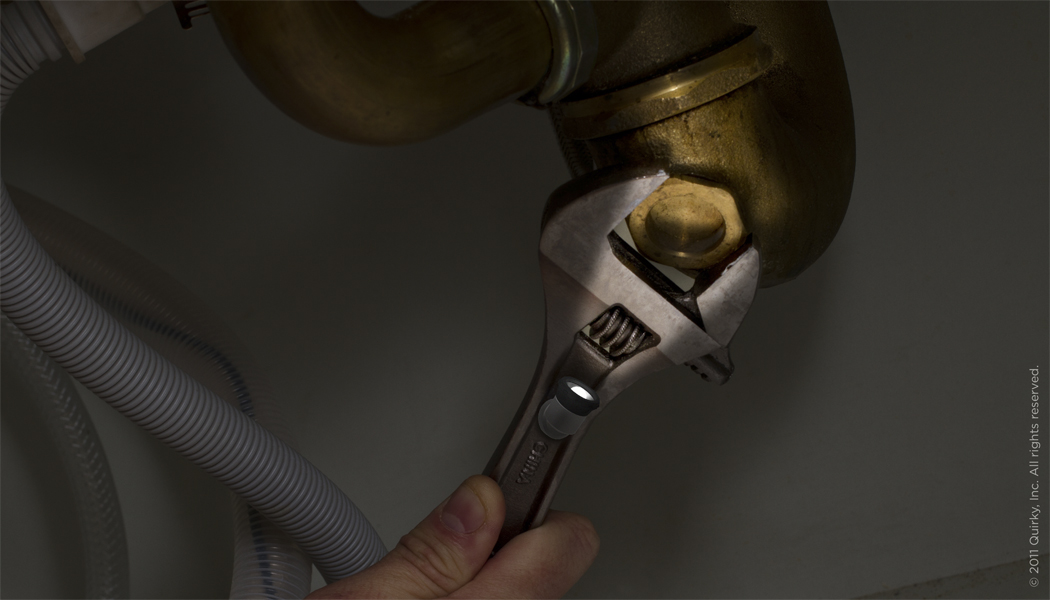
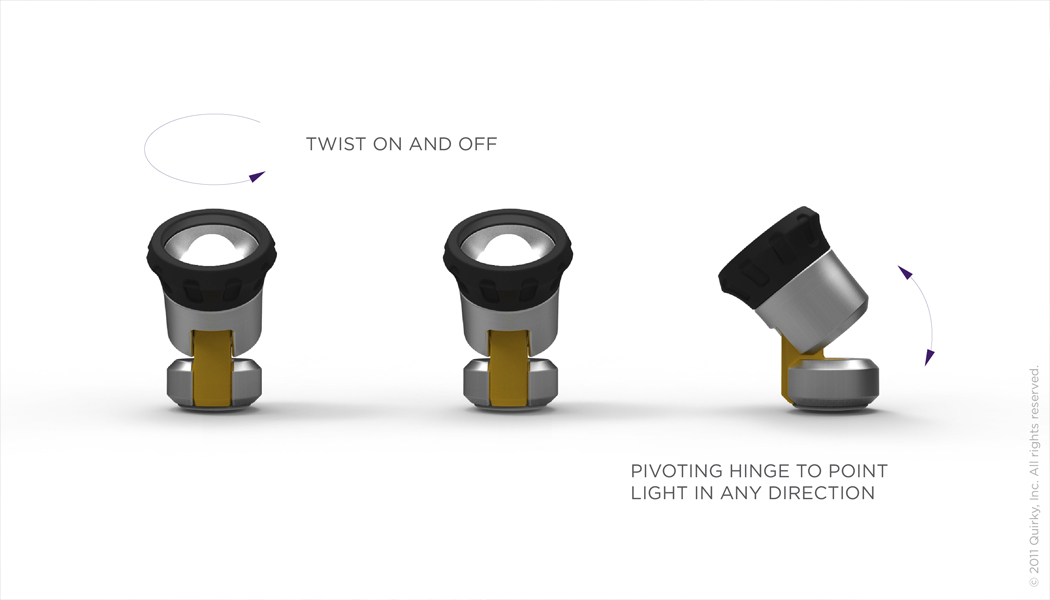
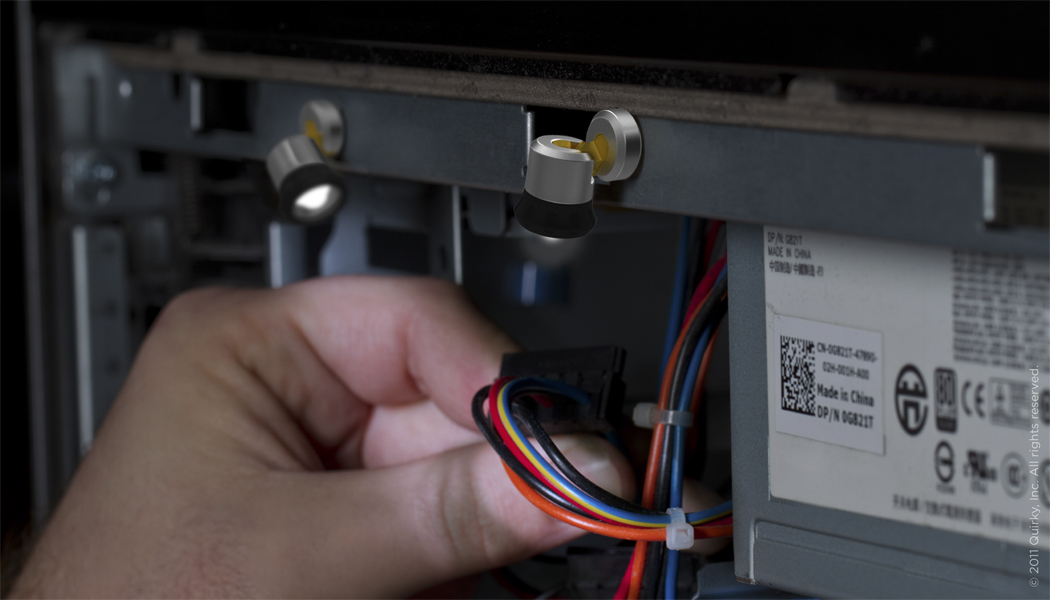
    Say goodbye to unlit nooks and crannies with Ions: miniature, magnetic LEDs that illuminate any dark work space with ease. Ions feature a magnetic base that can be attached to a metal tool or surface, providing a powerful light source where larger lamps may fear to tread. Pivoting hinges and a possible dimming feature maximize the versatility of these little troopers, making them an ideal addition to any project, be it in the kitchen, garage, or home office. How many applications can you think of?

    Inventor Douglas Diesel wanted to find a better way to bring light to dark work spaces, so he set out to invent a light that could truly be brought anywhere. With the help of 10935 influencers, that dream turned into Viking Lights, which has brought it’s quest for illumination to the Upcoming Section.

    Features:
    Grip dial to turn the LED on and off
    – Magnetic base 
    – Pivoting hinge to direct light in any direction
    – Possible dimming feature
    – 3 in a pack

    Materials:
    – Aluminum
    – Plastic
    – LED

    Dimensions:
    – 20mm Height x 12mm Diameter

    Price, qty and features subject to change during production process


  • Wed, Apr 25 2012

    Get out your umbrellas, folks. There’s a storm heading this way. That’s right –  we’re brainstorming two new products TONIGHT (6pm EST):

    - App-Enabled Dice

    - Pedal-Powered Charging Station

    If you’re new to brainstorms, allow us to explain. Every week, QDS blows a few product ideas wide open to kick off the design process. You can take part in that. Here’s how:

    1. Topics are posted above. In your wildest dreams, what would be the perfect way to make that product? What should it do, and what problems should it prevent? It’s a brainstorm, so anything goes.

    2. Visit the QuirkyLive Channel at 6pm ET on Wed. Log in on Ustream and throw ideas at us in the live chat.

    3. Can’t join the live brainstorm? Be sure to add your comments here before the start time, and we’ll have them in mind.

  • Wed, Apr 25 2012

    With Mercado having recently launched in the Quirky store and about to hit retail shelves nationwide, we thought we’d check in with inventor, Peter Wachtel, to discuss his experience having his idea go from sketch to store.

    Tell us a little bit about yourself.

    I’m a Toy designer, inventor, teacher and writer with my company KID Toyology www.coroflot.com/kidtoyology and a Fun Dad.

    When did you join Quirky?

    November of 2010.

    When and how did you think up the idea for this product?

    Dayra Pino (Summer Tomato) had submitted a Farmer’s Market Brief to Quirky, and though I don’t go to many Farmer’ Markets, my wife Sue does, and she had some good ideas… I wanted to design something that was useful/ functional, and good to look, as well as fun to use. I started researching Farmer’s Markets, bags and designing- then it hit me after playing with my Daughter and her clothes hamper earlier that day! What if the basic idea worked like my daughter’s collapsible clothes hamper that she stuffed so many toys in? After a lot of trial and error, and a few prototypes the Mercado was Born!

    Had you tried to make this thing on your own already?

    No, but built a few prototypes thanks to my daughter’s playfulness.

    What do you think of the final product?

    Amazing! A great combo of design and function.

    In your opinion, what is the most innovative product ever invented?

    My two kids & Apple Computer…

    What inspires you?

    Toys, design, Ducati Motorcycles, camping, swimming and playing with my kids!

    Any parting words?

    Keep on Quirkin! “What we do in life echoes in eternity” (Gladiator) and “The great man is he who does not lose his child’s heart” (Mencius).

    Mercado is now shipping from the Quirky store.

  • Tue, Apr 24 2012

    Justin with his invention, Mocubo

    With Mocubo having recently launched in the Quirky store and about to hit retail shelves nationwide, we thought we’d check in with inventor, Justin Giannone, to discuss his experience having his idea go from sketch to store.

    Tell us a little bit about yourself.

    I’m a true New York Pizza Bagel – Half Italian and Half Jewish. I grew up an avid tennis player and lover of all sports. I went to NYU and studied Psychology, Neural Science and Pre-med, and other random things. Since then I’ve served BBQ food, worked on Cisco networks, and worked in a number of roles for my family business, an electronic components distributor and LCD solutions provider.  I’m getting married in October to the love of my life who I cook for almost every day. I love art and entertainment that pushes the envelope. I’m involved with a incredible charity – The Huntington Breast Cancer Action Coalition, and I hope to be involved in more in the near future.

    When did you join Quirky?

    I think it was June of 2010.

    When and how did you think up the idea for this product?

    I thought of the idea when I was lying in bed trying to sleep. I had cleaned up after dinner, but didn’t feel like cleaning the cutting board (I used our biggest board so I could spread out). Since it was so huge and cleaning is such a pain in the tuchus, I just left it in the sink but that was stressing me out. Then it hit me. I started researching it on my phone right then and there at like 1AM. Then woke up and did some research and submitted it. Over the next few months the idea evolved into something much better.

    Had you tried to make this thing on your own already?

    No, I submitted it to Quirky about 10 hours after it first popped into my brain.

    What do you think of the final product?

    It’s fantastic. Simple, modern, beautiful, functional and fun. What more could you ask for?

    In your opinion, what is the most innovative product ever invented?

    Do human beings count as a product? If not, then go with the obvious, the smartphone. Every day I’m in awe of them.

    What inspires you?
    Risk takers like my parents and brother. Food. Big concepts like spirituality and the universe. Leafless trees. Maynard James Keenan. Travelling (especially to Europe). My nephews and their hilarious imaginations. Taoism. Biology & Psychology. Quirky.com and all it’s creative people. Open innovation. My friends and relatives, most of whom have amazing lives, and are living their dreams.

    What are some of your quirks?

    I love all things math and got a perfect score on my math SATs. I’m a big time dabbler.  I’m still that kid that asks “why” to everything. I need to understand everything and love learning. I’m a real jack of all “you know what”. I’m great at starting things…

    Any parting words?

    Thank you Ben and the entire Quirky team for making this happen and just being so damn cool. Thank you Quirky community for backing and helping to develop this product. Mocubo’s development has been a heck of a learning experience and confidence builder for me. This whole Quirky thing is special and I’m so proud and ridiculously excited to be a part of it.


    Mocubo is now shipping from the Quirky store.

  • Tue, Apr 24 2012

    Our partnership with GE continues in Houston. If you’re in the area, swing by the GE Garages at Rice University. This is your chance to roll up your sleeves and learn how to prototype (with 3D printers, injection molders, laser cutters and welding) and participate in workshops and training sessions.

    Where: Rice University, 2100 Rice Blvd. at Wilton St – West Lot 3
    When: Through 5/3 (2p – 8p daily)
    More info: ge.com/garages

  • Mon, Apr 23 2012

    Below are the results from this week’s Brainstorm session, featuring the collaborative work of our designers, invention ambassadors, and community members (click either image for a larger version):

    Product 314: Friendship Bracelets

    Product 280: Folding Chair

    The full feed for the brainstorm can be viewed here:


    Video streaming by Ustream

    That’s the recap! We’ll be posting a preview for next week’s brainstorm on Monday, but until then we’d love to hear your feedback on this week’s brainstorm and broadcast, so share and share alike in the comments. Change, as they say, is good.

  • Mon, Apr 23 2012
    David Veshapidze, a Business Owner from Alexandria, KY was making his famous flapjacks for his daughter, Sophia, and was trying to keep all of his pancakes a consistent size. Unfortunately, it was hard for him to measure exactly how batter he was pouring into the pan so he would have to settle for using smaller measuring cup to measure out the batter for each pancake. He thought there had to be an easier way to measure portions of liquids and batters as a person was pouring them. David came up with an idea that does just that. His measuring cup with radial measuring lines makes sure you dispense exactly as much liquid as you intend. Quirky looks forward to finding another new way to simplify portion control.

    Tommy Caldwell, a Registered Nurse from Doddridge, Arkansas was on vacation when he became fascinated with a shop that sold clothing, which changed colors when exposed to sunlight. Tommy began thinking about where else this type of technology could be used, and came up with his idea for a hair dye that changes color in the sun. This dye could be produced in temporary and permanent forms so a user can have standard highlights indoors and funky colors when they step outside! Quirky will be exploring this fun new way to change up your look.

    Sean Reilly works as a front desk associate in Logan, Utah.  Currently, Sean attends Utah State college and is studying to be a physical education teacher.  Sean goes to high school and middle schools all the time to teach gym classes.  He immediately noticed that almost every girl in these schools were wearing hair clips with colored hair. He thought it would be a good idea if he could advance this type of product and make it so the hair extensions would change colors.  Sean thinks that the marketability of this product will be huge and Quirky is willing to test the waters to see if his notion is correct.

    Alexi Anania was frustrated when playing iPad games and not being able to use actual dice.  Growing up she loved to roll the dice and felt that it was missing from newer technologies.  She came up with her idea of dice that interact with Apps so that people can get a more realistic feel of playing old school board games.  Quirky is willing to explore the idea and see what the competitive landscape for the product is, along with the marketability of the product.

    Cameron Walker is a creative director from North Carolina. Whenever she and her partner cook together, Cameron takes over about half way through and her main responsibility is to make sure everything is either taken out of the oven or off the stove in time.  The problem is, her partner needs to tell her ahead of time things like “the oven timer is for the chicken in the oven, the microwave timer is for the beans, and then the egg timer is for when you add the spices to the beans”. Cameron thought it would be a lot easier for two people to cook together if all of the timers were in one place with an easy way to label each one so that anyone that checks on the food knows which timer is for what. This led her to create a 4 sided timer. Cameron thought that this could be a social tool that could potentially expand into other markets.  The Quirky staff agreed with Cameron and felt there was a certain appeal to what this timer could do.


Page 1 of 512345»