Author Archive

  • Wed, May 2 2012

    Yesterday marked the start of National Inventor’s Month, an exciting time of year for us at Quirky. Throughout the month of May, we’ll be honoring the contribution that American inventors have made to our world, and the incredible tools and products they brought to life. From lightening rods to mobile phones, American ingenuity has compiled an unprecedented catalogue of work.

    In fact, the list of inventors was so impressive that we had a hard time deciding who to feature: naturally, our solution was to feature all of them. As some of you may have noticed, we’ve extended the timeline on Quirky’s Facebook page back to 1641, and transformed it into a timeline of American invention. From the first North American patent all the way to the present, we’ve chronicled the Who’s Who and What’s What of innovative minds and products throughout our nations history. There are close to 200 entries posted already, and we’ll be continuously adding more, so be sure to pop in and check it out! The origins of some of your favorite products may surprise you.

  • Tue, May 1 2012

    Today marks the first day that the Empire State Building is surpassed by One World Trade Center as the tallest building in New York, a title it has held since the tragic events of September 11, 2001. Coincidentally, the date also marks the structure’s 81st birthday, and the juxtaposition serves as a stunning reminder of the skyscraper’s history, and the monumental achievement it represented when first constructed. The tallest building in the world at the time, it would maintain its title for 41 years, engraining itself as an essential part of both New York and American culture. However, as newer, taller structures have risen across the world, the architectural uniqueness of the Empire State Building has diminished, making it easy to forget what a man-made wonder the construct really is. What makes it so sensational? We’re glad you asked.


    The Speed of Construction

    The Empire State Building may be the first monumental building project to actually finish ahead of schedule. Architect William F. Lamb was able to complete the full blueprints in two weeks, hastily incorporating aspects of his prior work on the Reynolds Building in Winston-Salem, NC (Empire State Building staff still send a card to the Reynolds Building every Fathers Day, as a tribute to their predecessor). Construction began on January 22nd, 1930, and involved nearly 3,400 workers who would be responsible for assembling the building’s 2,768,591 square feet. Because 40 Wall Street and the Chrysler building were both under construction when the project began, competition had already spurred work to a fever pitch, but contractors found that the Great Depression’s effect on material and labor costs sped the process up even further. Originally projected to take 18 months, around-the-clock work saw the building completed after only 15. The financial savings were even more dramatic: though contemporary estimates placed the cost of construction at $43 million (close to $1 billion today), the final total barely reached $24.7 million. Heck, the difference could pay for a whole second building.


    The Airship Terminal

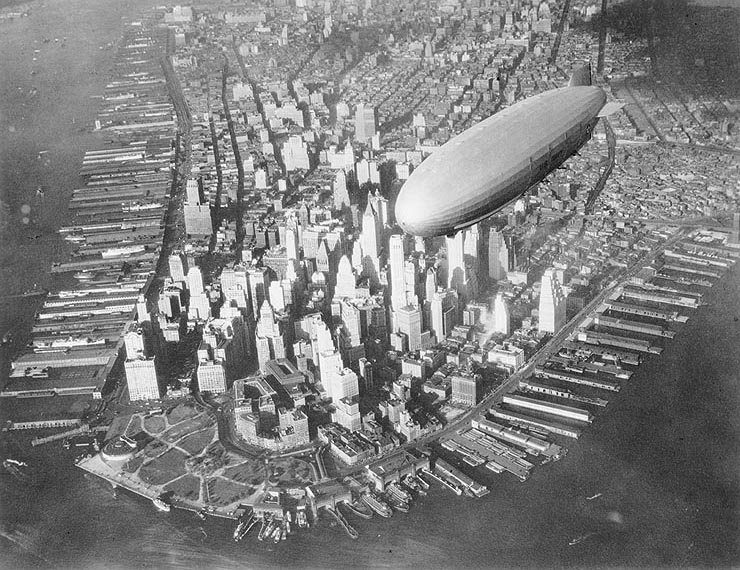
    Now a distinctive feature of the Manhattan skyline, the Empire State Building’s spire was originally built with a mooring platform for dirigibles, in anticipation of a boom in airship transportation. The 102nd floor was constructed as a landing platform, complete with gangplank, and dedicated elevators were built to accomodate the flow of passengers. However, to the disdain of steampunk enthusiasts everywhere, architects discovered that the building’s mass created violent updrafts, making docking a dangerous and unpredictable process. With no means of mooring dirigibles to the building, and with faster means of transport quickly taking precedence, the project was sadly scrapped, and the spire was repurposed as a radio tower in 1953.


    The Structure’s Size

    Though it has since been surpassed by larger, more modern skyscrapers, the Empire State Building is still a colossal construct by any standard. The structure consists of 102 floors, and reaches a height of 1,454 ft (spire included). Top to bottom, the building contains over 473 miles of electrical wire, and the cables for the building’s 73 elevators would stretch from New York to Baltimore if laid down end to end. The human capacity of the structure is equally impressive, as its 1,000 offices hold almost 21,000 employees, a population so large it merits its own zip code: 10118. In total, this adds up to 340,000 tons of American ingenuity, and tallest or not, we think that’s something worth celebrating.

    Sources:
    About.com
    OnBoard
    Wikipedia

  • Thu, Apr 26 2012

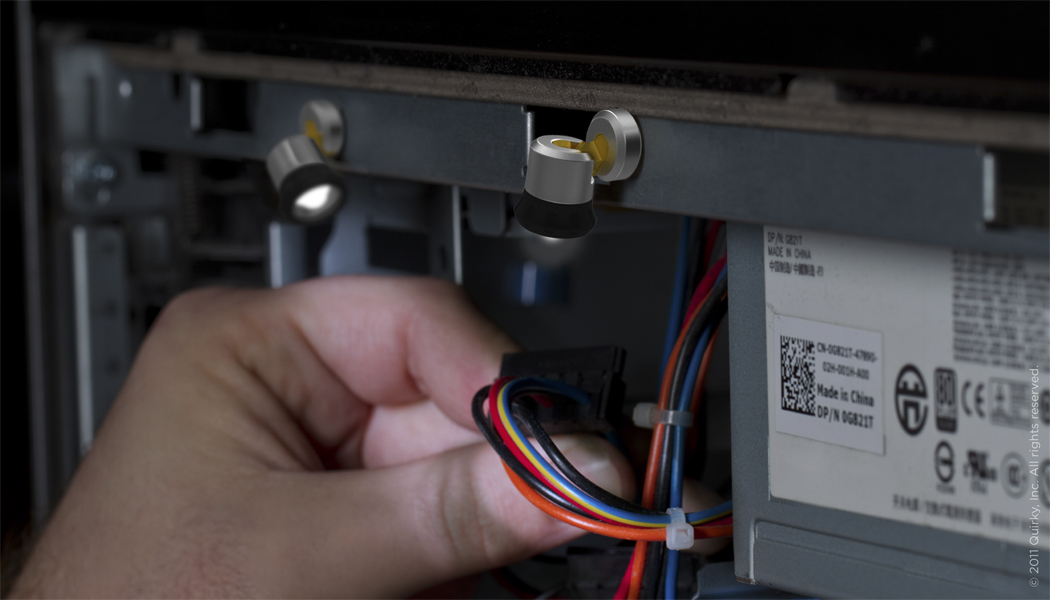
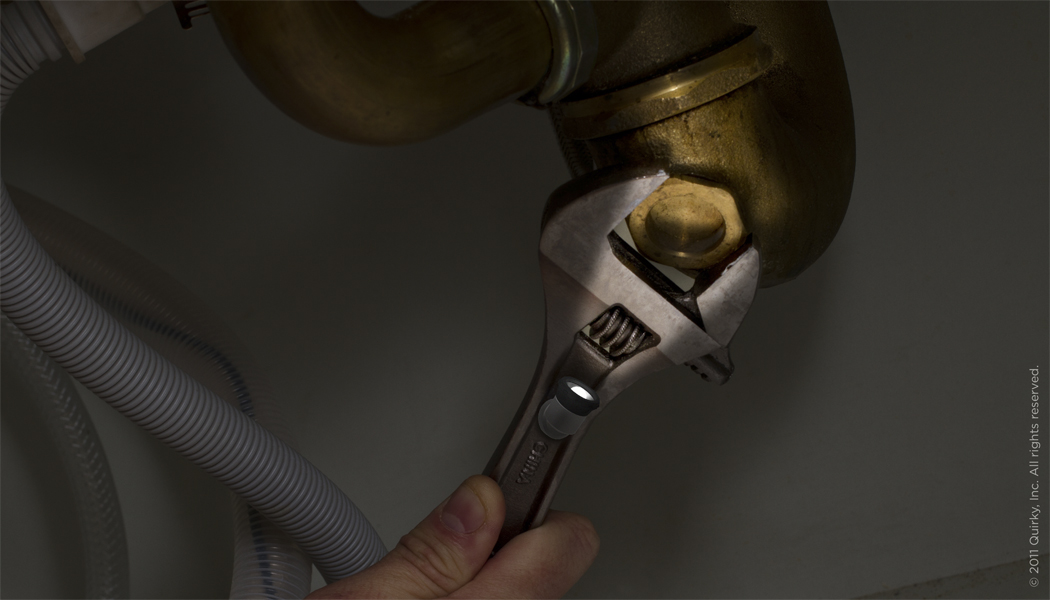
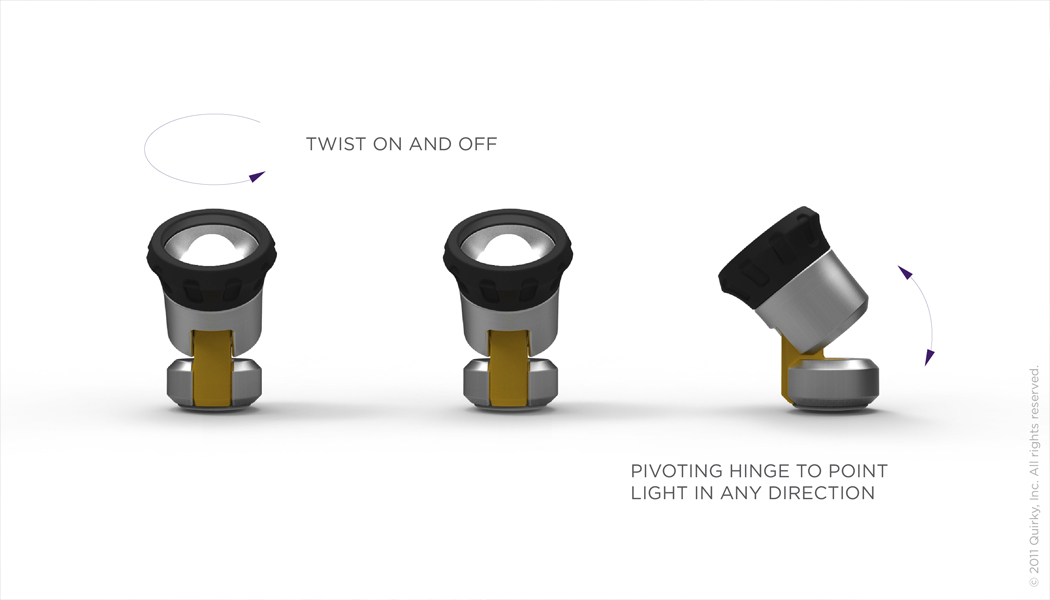
    Say goodbye to unlit nooks and crannies with Ions: miniature, magnetic LEDs that illuminate any dark work space with ease. Ions feature a magnetic base that can be attached to a metal tool or surface, providing a powerful light source where larger lamps may fear to tread. Pivoting hinges and a possible dimming feature maximize the versatility of these little troopers, making them an ideal addition to any project, be it in the kitchen, garage, or home office. How many applications can you think of?

    Inventor Douglas Diesel wanted to find a better way to bring light to dark work spaces, so he set out to invent a light that could truly be brought anywhere. With the help of 10935 influencers, that dream turned into Viking Lights, which has brought it’s quest for illumination to the Upcoming Section.

    Features:
    Grip dial to turn the LED on and off
    – Magnetic base 
    – Pivoting hinge to direct light in any direction
    – Possible dimming feature
    – 3 in a pack

    Materials:
    – Aluminum
    – Plastic
    – LED

    Dimensions:
    – 20mm Height x 12mm Diameter

    Price, qty and features subject to change during production process


  • Tue, Apr 17 2012

    This week’s brainstorm is shaping up to be a fun one, so sprinkle a little glitter on your thinking caps! The two new topics that will be discussed this Wednesday (6pm EST) are:

    - Glowing Friendship Bracelet

    - Folding Chair 2.0

    If you’re new to brainstorms, allow us to explain. Every week, QDS blows a few product ideas wide open to kick off the design process. You can take part in that. Here’s how:

    1. Topics are posted above. In your wildest dreams, what would be the perfect way to make that product? What should it do, and what problems should it prevent? It’s a brainstorm, so anything goes.

    2. Visit the QuirkyLive Channel at 6pm ET on Wed. Log in on Ustream and throw ideas at us in the live chat.

    3. Can’t join the live brainstorm? Be sure to add your comments here before the start time, and we’ll have them in mind.

  • Fri, Apr 13 2012

    Below are the results from this week’s Brainstorm session, featuring the collaborative work of our designers, invention ambassadors, and community members (click either image for a larger version):

    Product 279: WorkBoost Paint Stilts

    Product 300: Key Hider

    The full feed for the brainstorm can be viewed here:


    That’s the recap! We’ll be posting a preview for next week’s brainstorm on Monday, but until then we’d love to hear your feedback on this week’s brainstorm and broadcast, so share and share alike in the comments. Change, as they say, is good.

  • Thu, Apr 12 2012

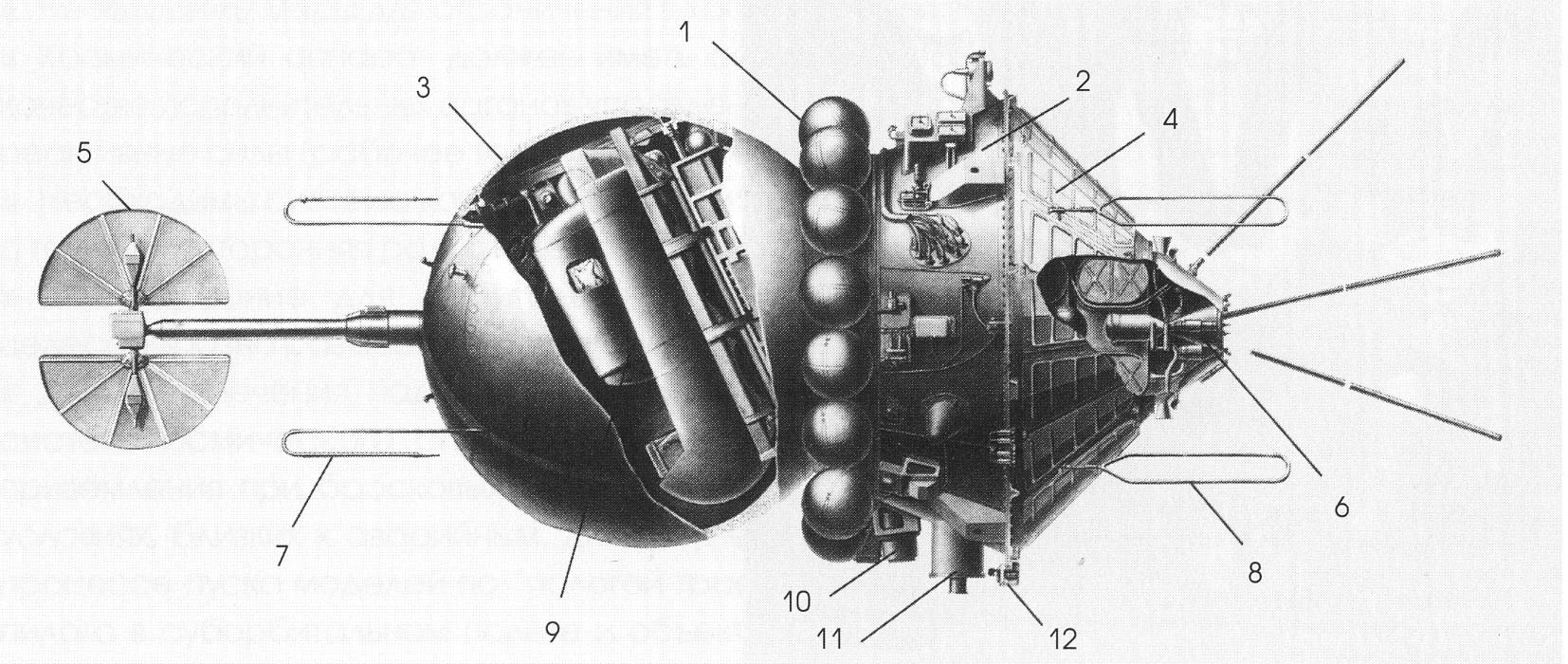
    51 years ago today, blasting off from a Russian launch site deep in the steppes of Kazakhstan, a Soviet pilot named Yuri Gagarin made history. Strapped into a cockpit no larger than a fighter jet’s, Gagarin became the first human to successfully reach outer space, completing a full orbit of Earth before coming down several hundred miles from his launch point. The vehicle that carried him on this incredible journey was Vostok 1, the brainchild of Russian rocket engineer Sergei Korolev and his team, and one of the most advanced pieces of tech at the time. The manned pod, only 2.3 meters wide, was attached to the end of a conical instrument module, which contained the fuel and propulsion system necessary to reach orbiting speed (like most spacecraft, the Vostok 1 required a booster rocket for launch, which was discarded once the craft exited the atmosphere). In honor of this little craft and its mighty achievement, here are seven neat facts you might not have known about Yuri’s high-tech ride:

    1. The Vostok 1 spacecraft, in its entirety, weighed 10,420 lb. The manned pod alone had a weight of 5,423 lb., one third of which was allocated to heat shielding.

    2. The speed reached by the Vostok propulsion system was 17,500 mph, the minimum velocity required to orbit the Earth. Moving at this speed (about 5 miles per second), Gagarin was able to complete a full orbit of the planet in less than an hour and a half.

    3. During development, the Vostok spacecraft was designed for use as both a manned spacecraft and an unmanned camera platform: the predecessor to the modern spy satellite. This dual functionality was important to gaining the Communist Party’s approval for the project, as they were keen on gaining a military advantage through the program.

    Yuri Gagarin, Vostok 1′s pilot and the first human to reach space.

    4. Because the engineers didn’t know how the human body would react to a zero-gravity environment, Vostok 1 was designed with a spherical shape to prevent its center of gravity from shifting. This assured relative comfort for the Cosmonaut inside, regardless of the craft’s orientation. The spherical shape of the pod also protected it from the enormous heat generated during reentry, allowing for maximum volume while minimizing surface area.

    5. Due to those same concerns about a Cosmonaut’s physical performance in zero-G, Vostok 1′s controls were also locked during flight. The craft’s trajectory was determined remotely by Soviet mission control, and Gagarin could only assume manual control after typing in a special code, written in an onboard envelope in case of emergencies (luckily, this function was never used).

    6. Because of the extreme stress that would be experienced by the craft during a mission, Vostok 1 was designed with only one window, a tiny circular portal about the width of a man’s face. Through this opening, Yuri Gagarin became the first man to view the planet Earth from space.

    7. While Vostok 1 was designed with a multitude of complex systems to keep Gagarin alive during orbit, the one thing it could not do successfully was land. Unlike later spacecraft, it was not fitted with thrusters to reduce its speed during re-entry, forcing Gagarin to eject at an altitude of 23,000 ft. and to descend to earth using a separate parachute. The Soviets decided to exclude this little detail from their press releases, which would later become the subject of controversy (the Fédération Aéronautique Internationale (FAI) required that both man and craft land together for a manned space mission to be officially recognized).

    The charred remains of the Vostok 1 capsule after landing, with the parachute still attached.

    Sources:
    Outer Space Universe
    Life’s Little Mysteries
    Space.com
    Wikipedia

  • Thu, Apr 12 2012

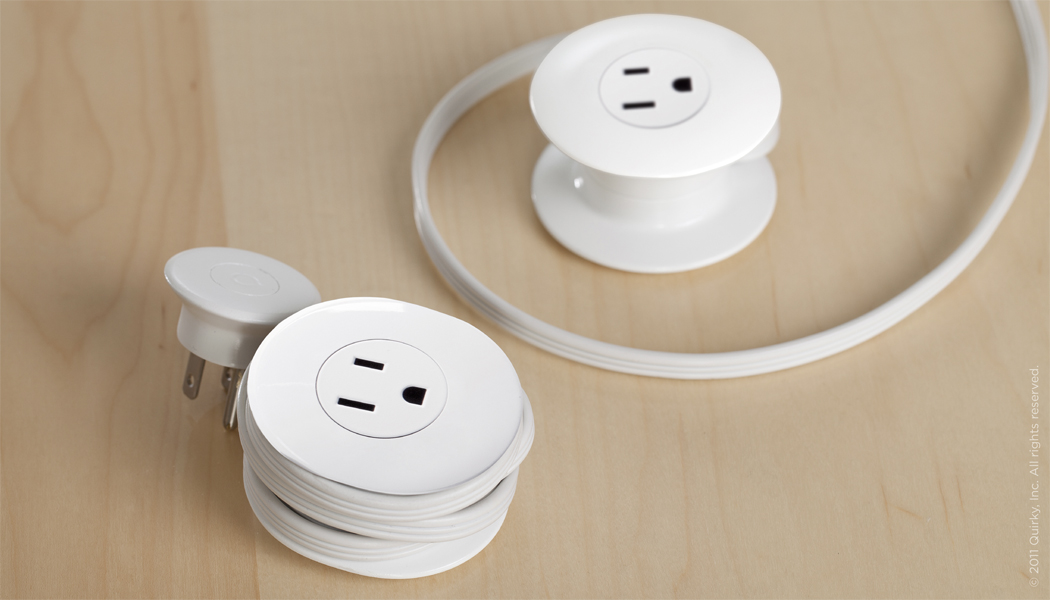
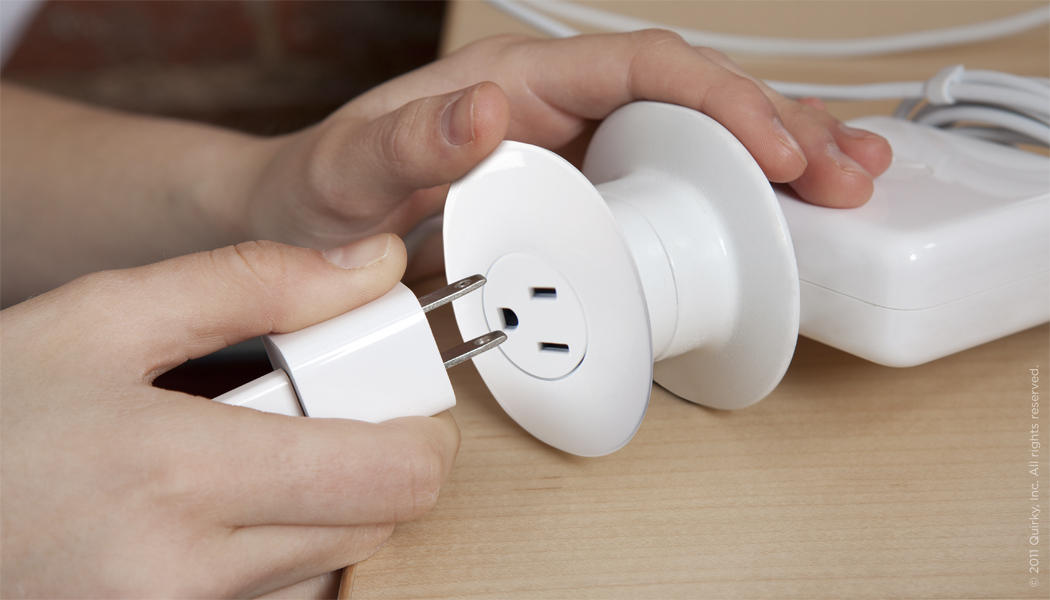
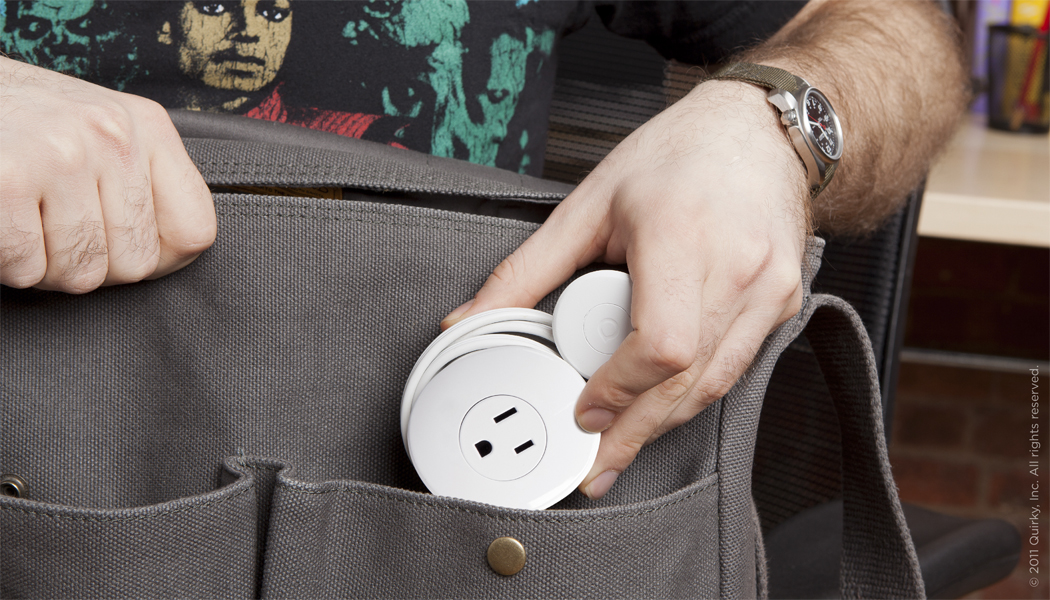
    Taunted by an outlet that’s just out of reach? Make it come to you with Port Power, a jolly little extension cord with cord management built it. Port Power come in two forms —one with a single outlet and one with two— but both feature spools that allow users to wrap excess cord around the extended outlet, keeping their space neat and organized. A clip holds the cord firmly in place so that Port Power can securely extend to any length. When not in use, this little bundle of convenience rolls up completely for compact storage.

    A veteran Quirky inventor, Mark Zech was tired of extension cords that looked more suited to a garage than a home. Thus, he set out on a (figurative) voyage to make an extension cord for the modern living room, and with 1550 influencers as his crew, discovered safe passage to a new land. That land was called Port Power, and it can be found in the Upcoming Section.

    Features:
    – 6 ft. extension cable
    – Integrated spool for cord management 
    – Single or double outlet extension 
    – Easy to store
    – Easy to place

    Materials:
    – Plastic

    Dimensions:
    – Single outlet: 73.5mm H x 73.5mm W x 47.5mm D
    – Double outlet: 73.5mm H x 65mm W x 47.5mm D

    Price, qty and features subject to change during production process

  • Fri, Apr 6 2012

    Though baseball is one of America’s oldest sports, with a tradition dating back to 1845, the technology surrounding the sport has seen surprisingly little change. Though the stadiums and fanbase have grown, along with player salaries, the game is still played with the same wooden bats, stitched leather gloves, and chalk lines that were used by the Great Bambino. However, while the fundamentals have stayed true to tradition, inventors have nevertheless tried to improve the sport with a variety of devices, and we’ve collected four of our favorites below in tribute. Some of them are clever. Some of them are weird. All of them, however, are a part of the American pastime, and we raise our glasses in their honor regardless.
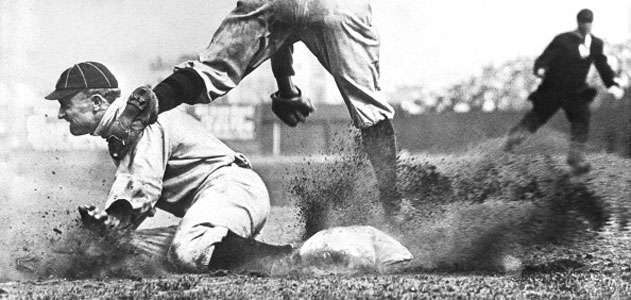
    Audible Signal Base

    When a runner slides into first base, the difference between being “SAFE!” or “OUT!” can come down to a miniscule margin of error, and disputes over an umpire’s decision have caused yelling matches and burst veins beyond counting. Indeed, the problem was identified early on, because in 1914, an inventor named Stephen H. Wells patented the first audible signal base, which was intended to improve the accuracy of an umpire’s call. The device used a pressure-sensitive plate to detect the impact of a baserunner’s foot, which would set off an electronic bell to alert the umpire at the moment of contact. This would allow the umpire to focus his visual attention on the moving ball. The technology, though well received, was never introduced on a wide scale, but we still applaud Mr. Wells for his dedication to peace and good will towards men on the baseball pitch.

    The Quest for the Unbreakable Bat

    Ever since man began striking flying objects with wooden sticks (we’re guessing it started early), he has had to deal with the problem of those sticks breaking. Even today, it isn’t rare to see a bat shatter under the force of a speeding fastball, as restrictions on the size and material of bats mean that very little of the actual structure can be changed. One creative solution was dreamed up in the early 1900′s by two gentlemen from Connecticut: Arthur A. Hadden and Lincoln S. May. This inventive duo developed a bat with an axial bore in the middle, that was filled by a wooden core with the grain at a right angle to the grain of the outer wood. This would allow the bat’s overall structure to better withstand impact, without the use of metal or polymer. Like Stephen Well’s audible signal base, the bat did not see widespread use, but we’ll leave you with a contemporary review from “The Baseball Magazine” as a judgment of its worth:

    “With this new war club the ambitious batter may confidently plan to send the ball whimsically whistling its way to the Durham sign-board. He need not fear that the bat will break.”

    Harvey the Rabbit

    Charlie Finley achieved a great many things in his lifetime. As owner of the Oakland Athletics, he was responsible for moving the team to California, for selecting the franchise’s iconic green and gold coloring, and for building a World Series dynasty that included the likes of Reggie Jackson and Joe Rudi. However, we at Quirky like to remember him as the man who invented “Harvey”.
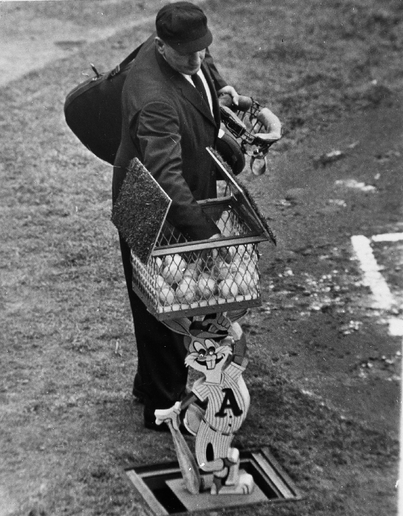
    Harvey lends an umpire a helping hand.

    Finley’s organization was famed for their marketing skill, and one of the entrepreneur’s most delightful innovations was a mechanical rabbit that delivered balls to the umpire behind home plate, affectionately named Harvey. Dressed as an Athletic’s player, Harvey would rise out of the earth like a mystical messenger, complete with glowing eyes and a rotating mechanism that spun him about as he ascended. Though Harvey’s career came to a close in the 80′s after a change in team management, he will forever live on as baseball’s most dedicated ball-boy.

    Pitcher’s Mirror

    Though you may not have heard his name, Danny Litwhiler is remembered by many as baseball’s most prolific inventor. On top of his careers as a Phillies outfielder and long-time coach of college baseball, Litwhiler developed over 100 inventions to benefit his favorite pastime, ranging from a special clay for keeping infields dry to the first radar gun used to measure pitch speed. The inspiration for his most creative invention came when he was watching TV, and saw a commercial depicting bullets bouncing off the front of an airplane: if glass could be made to withstand the impact of a bullet, surely it could stop a fastball as well! Litwhiler set to work designing an unbreakable mirror, that would allow pitchers to watch their form from a batter’s perspective, helping them to detect flaws and tells in their form.

    With the help of Pittsburg Plate Glass, he came up with a 5 x 3 foot mirror that weighed 150 pounds, and could withstand the impact of a 100mph fastball without cracking (the glass alone was almost an inch thick, and was framed in steel). The device was used by Litwhiler for decades during his college coaching career, and his mighty piece of glassware is still being used by the Cincinnati Reds and their pitching staff. That, Quirks, is dedication if we’ve ever seen it.

    Sources:
    The Baseball Magazine
    Baseball News
    Sports Illustrated
    Wikipedia

  • Tue, Apr 3 2012

    Alert! Due to the presence of a media crew who will be filming the event, tomorrow’s brainstorm will be held at 2pm ET, so be sure to mark your calendars. For this special brainstorm, we’ll be covering two intriguing products that both involve water:

    - Short Term Breathing Apparatus

    - Water Gun/Vest

    If you’re new to brainstorms, allow us to explain. Every week, QDS blows a few product ideas wide open to kick off the design process. You can take part in that. Here’s how:

    1. Topics are posted above. In your wildest dreams, what would be the perfect way to make that product? What should it do, and what problems should it prevent? It’s a brainstorm, so anything goes.

    2. Visit the QuirkyLive Channel at 6pm ET (2pm this week!) on Wed. Log in on Ustream and throw ideas at us in the live chat.

    3. Can’t join the live brainstorm? Be sure to add your comments here before the start time, and we’ll have them in mind.

  • Mon, Apr 2 2012

    Below are the results from last week’s Brainstorm session, featuring the collaborative work of our designers, invention ambassadors, and community members (click either image for a larger version):

    Product 291 - Road Safety Sign/Light

    Product 251: Car Cleaning Tool

    The full feed for the brainstorm can be viewed here:

    That’s the recap! We’ve got a somewhat special brainstorm planned for this coming Wednesday, so stayed tuned for an announcement tomorrow regarding the updated time/situation.


Page 1 of 212»