In addition to all the hubub surrounding yesterday’s announcement, Quirky products made several appearances throughout the week. Design World’s 8/29 interview with Quirky’s Head of Engineering, Research, Development, and Profoundness, John Jacobsen, continued to attract readers throughout the week for it’s focus on small manufacturing and 3D printing. Real Simple magazine included Totem in it’s August issue and on its website, and Pen Zen made an appearance on one of my favorite sites for finding cool stuff, TheAwesomer.com. FoxNews.com’s Back to School round up included Bobble Brush as one of the recommended gadgets and MilkMaid was listed in a story on futuristic gadgets from the Huffington Post. Finally, Vancouver.com included Pivot Power in a story about dorm room accessories.
If you follow this blog regularly you know that we published content to help you craft great submissions and keep you in the loop on Cordies Executive’s progress. Additionally, we posted updates on the Simple Solutions promotion we are running with Target. While the submission period ended on Tuesday, there is still a lot of work to do in order for us to pick the top ideas. For those of you who are curious about what is to be done about your #spotsv ideas that are still live, we provided an update on that too. Finally, if you saw Chad Hetherington’s recent tweets you’ll know that Quirky products are now being sold in Best Buy!
And that concludes yet another week’s recap. If you think we missed anything, please email us at [email protected] or leave a comment below. To tide you over for the weekend, here is the recording of last night’s Eval. Warning: the side effects of watching may include giddiness, critical thinking, and contagious laughter.
As we close out another week here at QHQ, our Simple Solutions brief with Target continues to hurtle forward, and we wanted to take this opportunity to notify the community of some potential changes that may occur over the coming week:
- To help Target and the design staff review the full list of ideas submitted to this brief, we’ll be building a separate, internal system for the team to use while browsing these submissions. To help facilitate this, and to free up the ideation scroll on the Participate page, all ideations submitted with the #SPOTSV hashtag are scheduled to be automatically expired by Quirky. If you see your #SPOTSV submission expire in the next week, don’t worry: it’s all part of the plan, and the idea is absolutely still being considered.
- In addition, the only submissions that will be reviewed are ideations that were active with the #SPOTSV hashtag as of September 4th. If the #SPOTSV hashtag was added to an ideation after September 4th, the submission will not be considered for the brief.
- If your #SPOTSV submission is not announced as one of the brief selections on September 24th, all is not lost. You may resubmit it to Quirky’s normal evaluation round after the 24th, to be considered via our normal Eval process.
Thanks for listening folks, hope you enjoy the weekend!
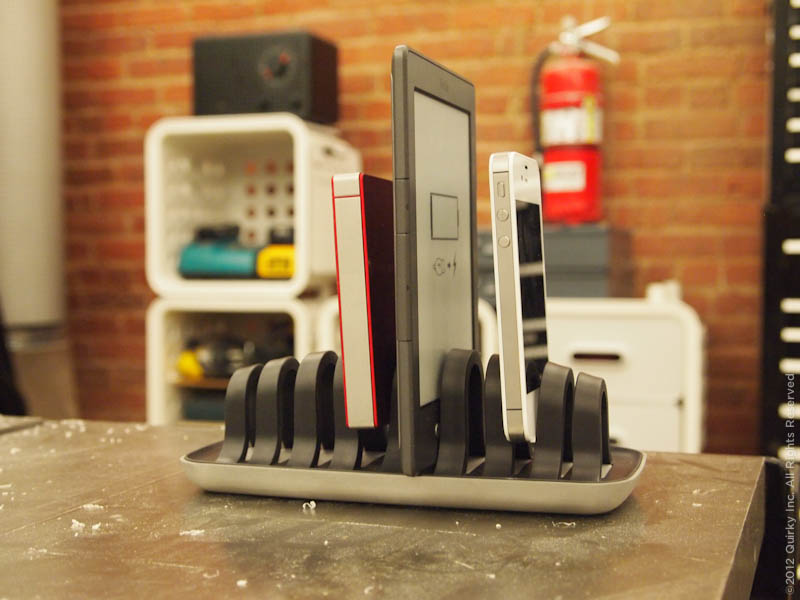
The Cordies family, which includes Cordies Classic, Cordies, Cordlets, Metal Cordies and Cordies+ (now in the Upcoming Section) has been a great line of products for the Quirky community. Inventor Stephen Stewart alone has earned over $78,000, and we intend for that number to keep going up. Part of this means keeping our ears open to what our retail partners have to say about our product lines, and based on these conversations, we came to the conclusion that Cordies needed a size boost: a model that can not only hold cables, but larger items like a smart phone or tablet as well. We’re calling it Cordies Executive.
After compiling market research data, along with community feedback on previous editions of Cordies, the Product and Retail teams feel that we can comfortably move forward with this item knowing that consumers will love it. As it moves into production, we wanted to offer a little insight into how Cordies Executive came to life, and the design process involved.
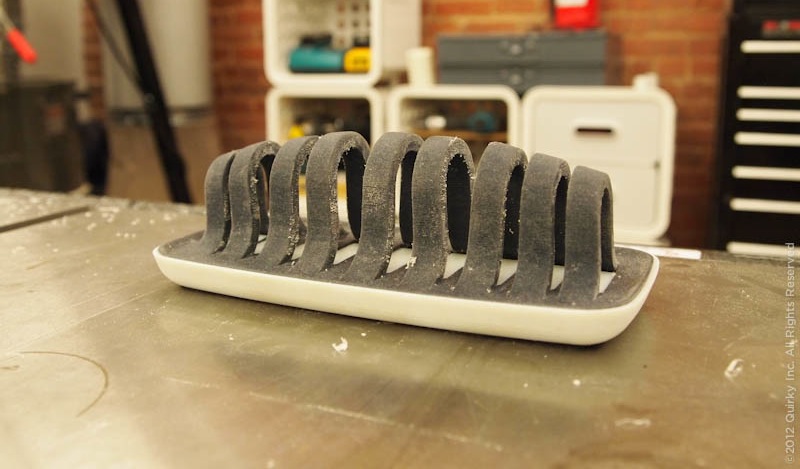
Designer Faris Elmasu, who had worked with the Cordies family in the past, was chosen to be project lead for the new line extension. When getting started, Faris understood that the design would have to be well aligned with previous Cordie models. He began to think of ways to scale up the design, while retaining the main aesthetic features of prior versions. Here is Faris’ first attempt at a 3D version of the Cordies Executive, via a printout from Bertha (our 3D printer):
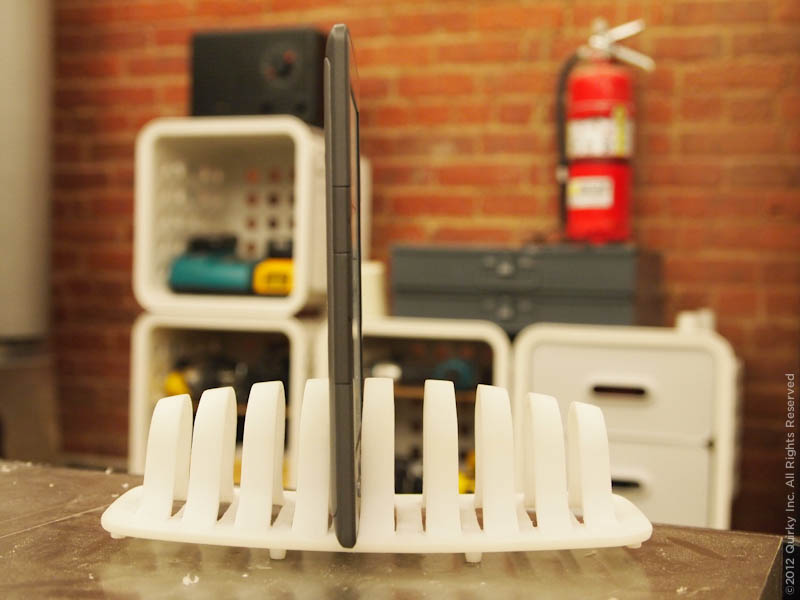
Early on in the design process, one of the issues Faris had to tackle was the flexibility level of the “spokes”. Before continuing, we should note that Bertha prints in a wide range of rigidities: darker resins are more flexible, while lighter resins become more and more rigid, with a white resin being extremely stiff. As you can see from the picture above, the spokes were first modeled to be quite flexible, and were designed to hold large, thin items well. However, while 3D printouts offer a great way to visualize the product’s final form (we call these “look-like” models), the resins do differ from the type of plastic we would use to manufacture the final product. This is something we must always be cognizant of, as the “memory” of the material performs differently as a result.
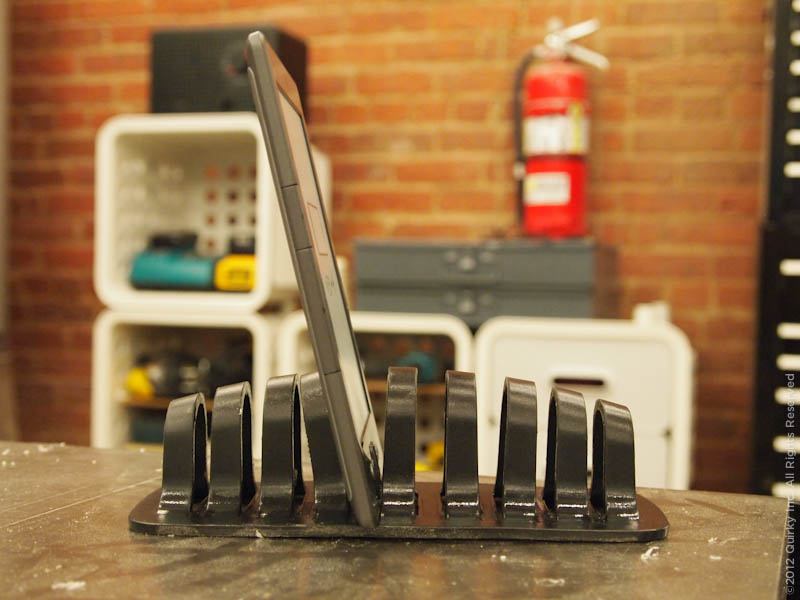
Once the initial prototype was complete, Faris’ next step was to talk with our manufacturer about getting a soft tooling sample. The term “soft tooling” refers to the fact that the tool used to make the prototype is constructed of plastic, rather than metal. Soft tooling samples are useful because they give designers a more realistic understanding of how the design will function in its current shape, as they are made with the same material as the final, mass-produced version. Another benefit of soft tooling is that, in the case of a major design change, the cost of alteration is greatly reduced. A tool made out of steel (which would produce an “off-tooling” sample) is very costly to alter, even if the adjustments are relatively minor. For Cordies Executive, our first soft tooling sample was made out of Thermoplastic elastomers, or TPE. Using this material, Faris noticed that the spokes started to bend and stay bent very easily after an object was placed in between them.
Faris attempted to resolve this issue by changing the material of the soft-tooling sample. He switched the sample material from TPE to Low-density polyethylene (LDPE), a much more rigid thermoplastic. Faris and the engineering team were correct in their notion that these LDPE spokes would stay intact, as the new soft tooling samples retained their shape much more effectively. However, the product ended up looking rather cheap, and we did not think that it would command a high-enough price point to be sold effectively.
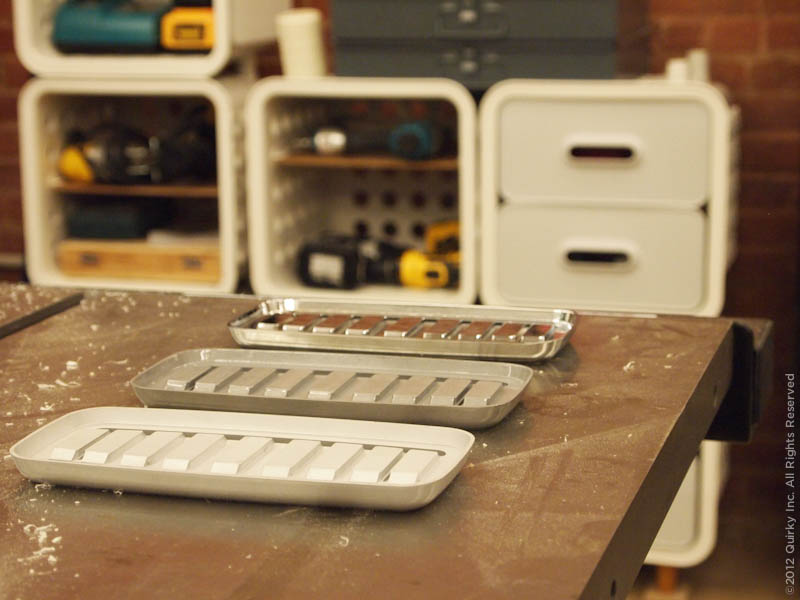
While working out the issues with the spokes for Cordies Executive, Faris was also receiving off-tooling samples for the bottom component of the product. These bases were made out of casted aluminum and tooled from precision steel. Our manufacturer provided us with a variety of different finishes, so that we could select the one we thought would make the most sense for this product: elements like price and aesthetic were the key factors when making this decision. Ultimately, we were presented with quite a few off-tooling samples, including finishes such as chrome (furthest), oil-finished aluminum (center), and clear coat aluminum (closest), but decided to go with an untreated, sand-blasted aluminum.
Since Faris wanted to retain the look of the TPE spokes, he decided to move forward with TPE as a final material, addressing the warping issue by increasing the thickness of each TPE spoke, which gave them greater rigidity while still retaining the “executive” look. This led to the culmination of design, materials, and engineering, and the final prototype for Cordies Executive! Tell us what you think in the comments section below.
What follows is based on my own personal experiences, views and opinions about the world of startup financing.
I’m sharing today because I believe in the educational value of other people’s failures. Here are mine.
An Introduction
I started mophie over seven years ago. It began very simply:
I had an idea. I believed the only thing standing in the way of my gift wrap and ribbon prototype of the first “lanyard-headphone” becoming a mass market success was just a little bit of dough.
Like most entrepreneurs and creative people, to me money appeared to be the only barrier.
So, with the same instincts that instruct me to breathe and blink every now and then, I began raising money.
After endless Excel models, the writing of my first (and last) business plan, promising that I would go to college, and committing not to do anything stupid. My first round of funding came from a second mortgage on my parent’s house.
Mom and Dad Kaufman
My parents invested $185,000. If I remember correctly my Mother took 90% of the founder’s equity in her name, and gave me 10% with the chance to get to 50% as she was paid back (if producers for Shark Tank are reading, call Mindy Kaufman).
To this day, that first round of money was the hardest to raise—even though it was my parents. They put me through the ringer, and boy am I glad they did.
I took the deal, and began working on my little product under the name mophie—named for my two golden retrievers, Molly & Sophie.
The origin of the name ‘Mophie’
mophie had a rocky beginning. I didn’t know what the fuck I was doing. My security blanket was the money I had raised, so I used it to learn.
Think college is expensive? Try retooling a consumer product 5 times because your engineers and/or factory didn’t have their shit together.
The $185,000 my parent’s bet their house on quickly vanished in the back streets of Shenzhen. It was then that I realized that money was not the thing standing in my way, but rather the details and intricacies of execution.
Yet still, money was necessary to keep the dream alive.
Somehow, I hustled together a small angel round from Vermont entrepreneurs in order to get to a Macworld trade show.
I then hustled folks at the Macworld show into digging a set of renders for products that didn’t exist yet, ultimately taking home the Best of Show award at Macworld 2006.
Then came my first Venture Capital Round.
1.5 Million Dollars. I was 19.
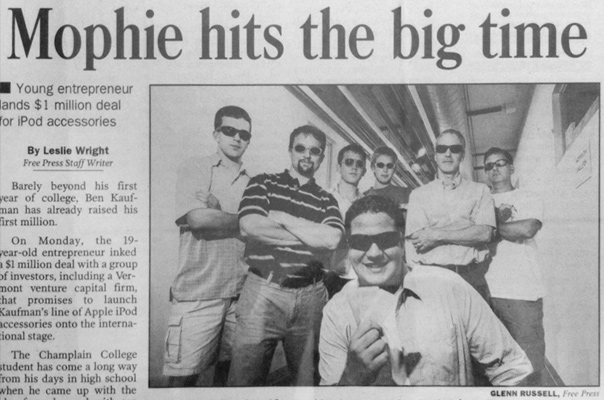
Know what the press said? “Mophie hits the big time”
That’s where our story begins…
The Burlington Free Press – August 01, 2006
Startups, The Press, & Funding
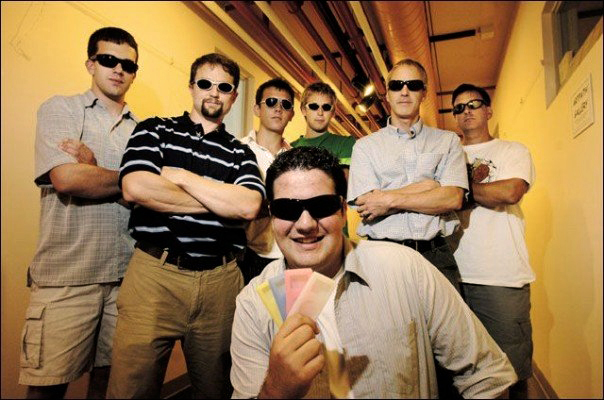
There were 7 guys on the cover of the local paper that morning. All in douchey sunglasses holding a set of iPod condoms like they were Benjamins.
One of the seven dudes was the guy the venture capitalists hired to replace me as CEO of mophie because I was too “inexperienced”.
“Hitting the Big Time”:
The Regrettable Photoshoot
We hadn’t shipped any of the 12 products we showed the Macworld attendees in San Francisco 8 months prior.
We raised 1.5 million dollars at a 1 million dollar pre-money valuation. I lost complete control of a company I worked incredibly hard to start, and a great deal of confidence in myself as a result.
The world (and our team) believed what they read. We were treated differently. We treated things differently. The world thought everything was done, mophie was successful.
My grandfather called me to congratulate me on building a successful company. We still hadn’t done shit. We just got some dude to write a check.
This experience, coupled with another 6 years of institutional financing experience after, has lead me to accumulate a comprehensive array of reasons why I hate glorifying startup financing, and why it disgusts me when fellow entrepreneurs gloat about how much money they’ve raised as part of their 60 second elevator pitch.
In the eye of the public, and specifically the tech community, funding is thought to mean much more that it actually does. The world views funding as a badge of honor. I view it as a scarlet letter.
I’m continually disturbed, insecure, and uncomfortable about what it means to raise money, and what it means to boast about it. Here’s why:
A few establishing remarks:
It’s undeniable that one of a CEO’s primary jobs is making sure that there is enough money in the bank to do the concept justice. Throughout my career, the longest I’ve gone without worrying that my vision was being throttled back by resources was probably around 8-10 months.
For most endeavors, money is necessary. That’s ok. None of the below is meant to dissuade you from raising money.
Raising money is indeed an accomplishment, and it most certainly is not easy. Most startups struggle to get people to buy into their visions, and those who receive the scratch necessary to pursue their dream definitely have something to be proud of.
For those of you who haven’t been able to close a round yet: use the below as comfort that the folks who have aren’t as far ahead of you as they may seem.
For those who have, realize that the press release announcing your big fundraise will only keep you warm for so long.
Things I have learned from closing rounds & announcing funding:
1. Be bigger than your round
If the press is only writing about how much money you raised, it’s because you haven’t done anything bigger. That’s on you and your team. Work your ass off to make sure the money is not the news. You should be really fucking uncomfortable if the money you raised overshadows the work you’ve done. It scares the shit out of me every night. Still does. Don’t rest on your round. Fight your round, be bigger than it. Make people forget that time you raised money.
2. Lead through it
The way you carry yourself through the announcement of a financing has a huge effect on your team and community. If you pretend it’s the coolest biggest deal in the world- they will too. Suddenly, all the hard work they are putting into launching a new product is out-shined by the fact that you got someone to write a check. As some illusion of success is felt, the collective level of hustle will naturally wane.
3. Be insecure
When I sign a term-sheet, I get angry and uncomfortable. “Shit, ok no excuses anymore–I gotta do this.” There is an immense sense of responsibility. Let your team feel your stress, your angst, your hunger. The passion of all around you will go through the roof. People won’t just throw money at problems, they’ll work with the same scrappiness and drive that got you this far.
You don’t have to pretend you’re a big fucking deal. You’re not (yet). Be insecure.
4. Congratulations
Don’t congratulate people for raising money. That was never the goal. The goal is building a successful and meaningful business. When people raise money, instead of congratulating them, wish them luck. Their work is just getting started.
Congratulating people for financing perpetuates a problem that has plagued the startup world. The problem is that that it’s easy to focus on the hype surrounding a company, and lose sight of the fundamentals.
This is why our industry is flooded with what I call “startup fuckers.” These are people whose only ambition in life is to raise money, and then sell their company. They have no real interest in building a meaningful and enduring business. If we let startup fuckers dominate, we all lose.
Read TechCrunch and any other “deal blog” and you’ll see countless companies boasting about how much money they’ve raised and how great they are as a result. It’s bullshit. They’ve done nothing (yet). Don’t fall into the trap of congratulating them.
This is my favorite startup quote of all time (although I don’t know who said it):
“Congratulating an entrepreneur for raising money is like congratulating a chef for buying the ingredients.”
That says it all.
5. Put your ass on the line.
Lay out clear goals for your users and staff as to what you hope to achieve with this round of funding: why you’ve raised the money, what you’ll do with it, and how the collective performance of everyone involved can be measured. Even if the money is news in the short term, you’ll have something to point to. “Judge me on this.” Some say under-promise / over-deliver. That’s fine. But do promise something, otherwise everyone will make up their own mind about how much your round should let you accomplish.
What I am trying to communicate is that there is a message to be sent along with the consummation of a fundraising round. And that message isn’t, “Yay! We did it!” Your messaging and attitude will set the tone, and the culture, of your company moving forward. Act accordingly.
A Taste Of My Own Medicine. Quirky’s Series C:
I didn’t go to summer camp this year. I went fundraising instead. It consumed my entire summer, and did wonders for my SkyMiles status. I met some great people, and learned a lot about myself.
I view the process of raising money as somewhat cathartic. When you’re building a company you tend to believe your own shit. Sitting through months of constant interrogation about your prior and future decisions makes you understand how things are perceived by folks outside of your little ecosystem.
As we have many times in the past, we chose to go with the better partner / firm, rather than the best valuation. As much as I valued the interrogation of our business, my team and I waged our own interrogation of the folks on the other side.
We were intent on finding partners who shared our vision for how Quirky will change the world. Plain, simple, and as cliche as that. We looked for a firm who believed, with great conviction (as we do), that Quirky is going to make the world a better place by enabling creativity at an unheard of scale.
There are no two firms in the world with a better track record for swinging for the fences and believing in ambitious missions than Andreesen Horowitz and Kleiner Perkins.
With full & complete transparency: here is what to expect from Quirky in future. These plans could change, but as of right now these are the things top of mind for us.
Pace & Verticalization
We’ve been clear in saying our mission is to Make Invention Accessible. As time has gone on, we’ve actually been doing the exact inverse.
Increasing submissions to the site and a steady two product per week pace means the chances of becoming an inventor on quirky have diminished over time.
The undeniable fix for this is increasing the pace at which we choose ideas and bring products to market. We’ve been testing this internally for quite some time and are confident with some structural changes and additions to our team we can comfortably scale.
We aren’t taking on more for the hell of it, we are taking on more because it will produce better products, and more vibrant communities.
The quality of the feedback you’ve received as an inventor on Quirky has gone down over time. The “community” has become one central place where people are reviewing ideas that aren’t necessarily even relevant to them. Too much noise, not enough signal.
Ideas for a new type of baby bottle shouldn’t be shat on by a 43 year old hardcore gamer who lives in his parents’ basement. Similarly, his Monster Energy coozie shouldn’t necessarily be reviewed by Kindergarten teachers.
The online and offline world is filled with vibrant, vocal and knowledgeable communities centered around shared affinities. We intend on giving each one of these communities its own little invention machine.
Retail Revolution
We’ve been blessed with some of the best partners a company can ask for: Bed Bath & Beyond, Target, Staples, QVC, Container Store, etc. All of these amazing partners have bought into the crazy idea that consumers are the best place to look for innovation.
One thing has been clear: retail isn’t setup for fast-and-agile. Retail is dominated by large organizations that plan 12+ months in advance, and hate risk.
This doesn’t jive perfectly (or at all) with our plan to introduce several new products on a weekly basis (especially because we can’t even tell them what those products are until a few weeks before launch).
It’s because of this that we intend to take control of the last mile: the shelf space itself
…and by “us,” I mean you.
Once everything is sorted out, negotiated, signed and sealed, we’ll be experimenting with our own space at retail. The space will be within the same great stores we are doing business with right now. Difference being, it’ll be completely managed by you. Change the assortment on a daily basis, run your own promotions, check product in/out of the store.
You’ll be our chief merchant in your town.
US Manufacturing
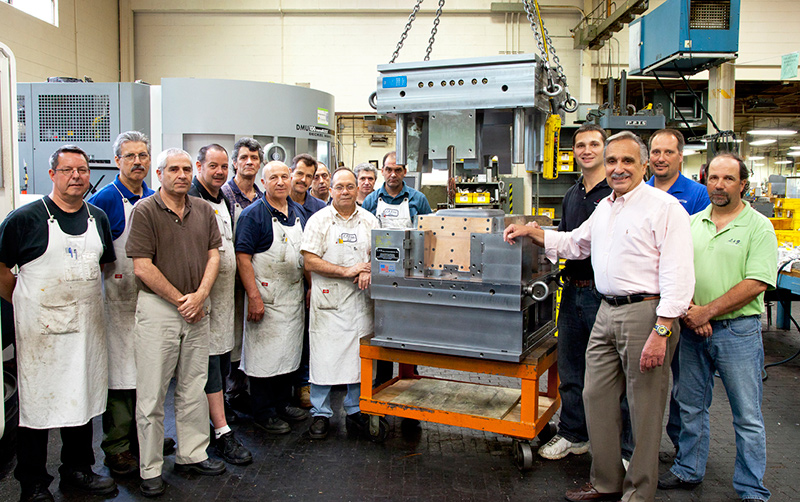
What I saw when i visited our factory in New Jersey had a lasting impact.
This country and industry is headed in the right direction, and nothing can fuel that fire more than average people’s ideas being made right here in the US.
It will take quite some time before we will manufacture a majority of Quirky products here in the US, but over time I believe we can and should.
We will invest in US Manufacturing. I promise to provide more quantifiable goals and milestones once we are a bit further along.
What today means to me, and to the Team at Quirky
We are proud today because of the opportunity we can now provide to our inventors and influencers.
We are proud today because of our newfound ability to invest in US Manufacturing
We are proud today because of the knowledge and mentorship we will receive from Scott and Mary
We are proud today because of the new challenges we will take on, the failures we will have, and the lessons we will learn.
We are proud today because of the inventions and innovations the world will now be able to enjoy. Inventions that wouldn’t have been possible if we ceased to exist.
….but then we shut the fuck up and get to work, because none of the above matters unless we execute.
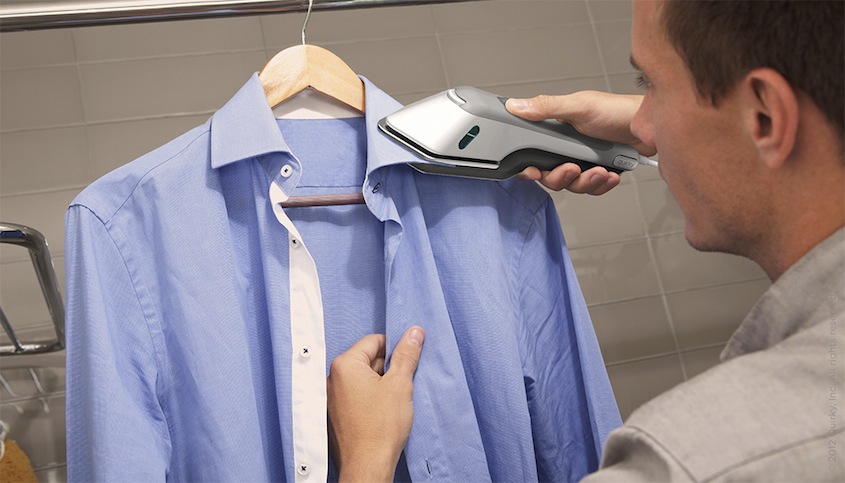
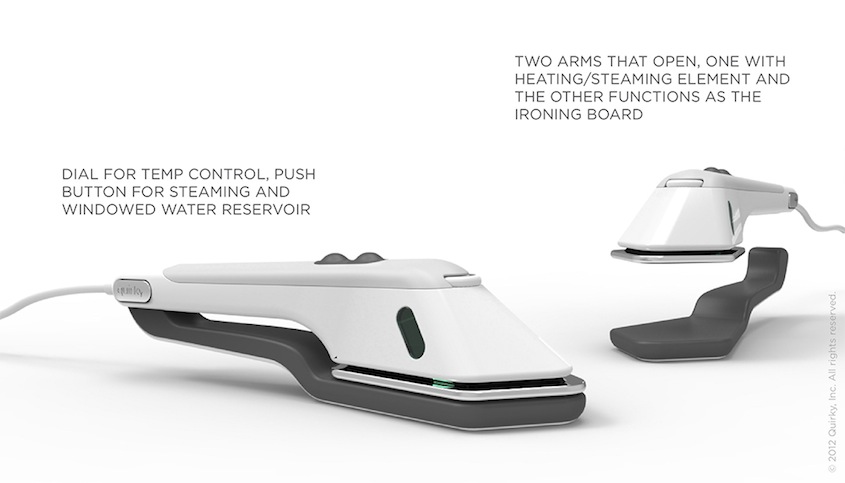
Frequent travelers often struggle with the iron and ironing board combo. That’s why Quirky developed Enfold, a compact, ultra portable, double sided iron that let’s you steam and press your articles on the go. It features two arms that open up for ironing duty; one with the heating element and steamer similar to a standard iron, and another that functions like a small ironing board. If you simply want to steam your clothes, press the buttons on the end to transform it into a steamer and trivet. Water for steaming is stored in a small reservoir near the top and an accompanying window lets you monitor how full it is.
Long time community member Patricia DiBart was accustom to using her hair iron instead of the standard ironing board and iron, when she came up with the idea of combining all three. After convincing the Quirky community of the ingeniousness of her idea, 6,379 influencers helped the Quirky Design Staff develop it into Enfold. Get ready for the future of ironing by sharing your thoughts on pricing via Quirky’s Upcoming section today.
Features:
— Two arms that open for ironing
— Dial for temp control
— Push-button release mechanism for steaming
— Windowed water reservoir
Materials:
– Plastic
— Metal
— Nylon
Dimensions:
235mm L x 70mm W x 65mm H
Price, qty and features subject to change during production process
A big “thank you” everyone who contributed to last night’s brainstorm and for those of you who couldn’t, here’s your recap. Below you’ll find the results of our brain-busting discussions and the detailed mindmaps that came out of them.
That’s the recap! We’ll be posting a preview for next week’s brainstorm on Tuesday, but until then give us your feedback on this week’s. Change, as they say, is good.
Heads up makers! We’ve got a unique problem to tackle, and in typical Quirky fashion, we need your help to ensure we get it right.
Over the past few months, we’ve been refining the design for Kate Vallon’s Pod Power, in preparation for its jump to manufacturing. While most of the details have been ironed out thanks to good old-fashioned engineering, the question of cord length endures: Pod Power is driven by the need for more accessible power, but it’s hard to tell what “accessible” means unless you know how the product will be used. Our solution, in short, is to ask the community: we’ll be launching an Ethnographic Research phase for Pod Power to examine consumer use cases, and since this project entails a little more work than most, we’ve decided to spell things out in a blog post to make sure the instructions are clear.
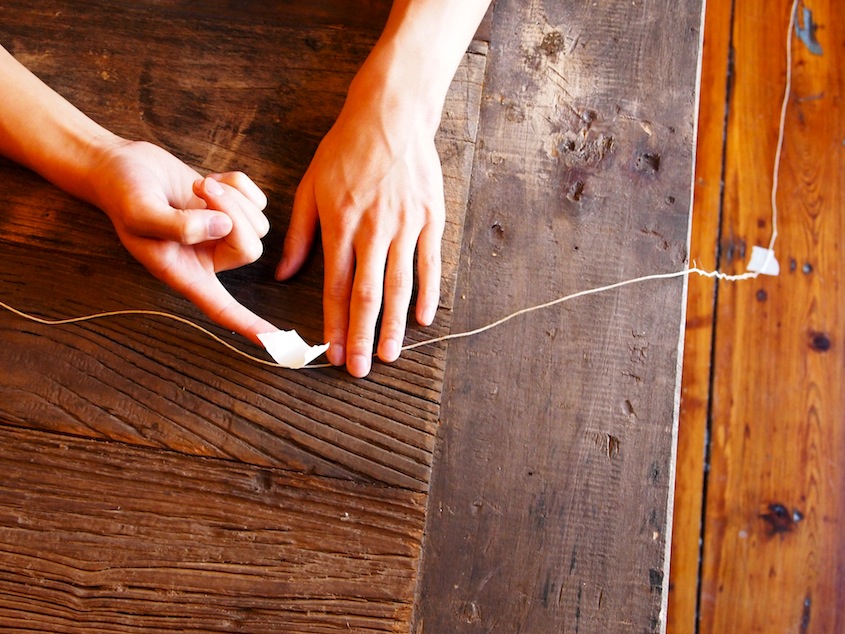
The purpose of this project is to better understand how Pod Power would be used in a real world setting. To this end, we’re asking members to recreate a potential use case, using string and tape as a substitute for the actual product. Here’s how it works:
1. Find an outlet somewhere around your home, preferably in an area where you frequently use electronics (bedroom, office, living room, etc.). Tape the end of a string to the outlet, to represent the base of the plug.
2. Next, locate a spot nearby where you would like the first pod to be placed. This can be next to a chair, under a desk, or along a countertop: anywhere you wish you had an extra outlet handy. Extend your string to this location, and mark it with a piece of tape. The string itself should be relatively straight, but it doesn’t have to be taut.
3. After marking the first pod, look around the room for other potential pod locations, extending the string to each in turn and marking the spots with tape. You can look over the launch images for Pod Power to get a better understanding of how the product can be used.
4. Once you’ve placed three to five pods around the room, take a photo of the complete layout (try to include as much of the setup as possible, but don’t worry if certain parts don’t fit in the frame). After this is complete, retrieve the string, remembering to keep the various pieces of tape attached. Using a measuring tape, measure the distance from the end to the first piece of tape, and the distance between each subsequent piece.
5. Submit these measurements to the Ethnographic Research phase along with your photo, and boom! Guaranteed influence. As a reference, your submission should look something like this:
End of String to First Pod: 35 inches
First Pod to Second Pod: 31 inches
Second Pod to Third Pod: 38 inches
Firstly, we’d like to thank everyone who submitted concepts to the Simple Solutions brief we launched with our friends at Target. Over the past week, members have submitted over 1,200 product ideas with the #SPOTSV hashtag, from soup-cooling spoons to compact dish scrubbers. However, now that this first stage is complete, it’s time we gave a breakdown of what comes next.
During the next few weeks, the Quirky Design Staff will be working with Target to narrow down the list of submissions to around 15 concepts. By Monday, September 24th, we’ll announce the final picks, and begin a community design phase for each of the selected products. On October 3rd, after a period of monumental hustle, the results of these projects will be rendered (and possibly printed) by the design staff, and presented to Target for a final review. The final stages of the project will be fleshed out later this month, but for now, September 24th is the date to watch.
Thank you again to all the people who’ve participated in this effort so far: this is a new kind of project for Quirky to tackle, and we’re excited to see where it leads! If you have questions about the brief, or any stage of the process, feel free to post them in the comments below, or send then in an email to [email protected].
Squeak is moving into production! Our retailers are confident in the product, and it’s time to take this baby to market. Take a look at it in the Upcoming Section, and help us to determine the price by playing the Pricing Game.
Congratulations to TeamLab, made up of Sonia Covarrubias-Garcia, Matthew Murrie, Barbra Winston, and Justin Turnbo, and all of the 3,089 community members that helped influence the product!
A few months ago, the Community team ran a blog post written by veteran inventor Marc Rumaner, outlining the process he follows when submitting an idea to Quirky. The post turned into a great resource for new and old members alike, and in light of its success, we’ve decided to write a similar series of posts from the perspective of the Quirky staff.
Over the next few weeks, we’ll be dropping knowledge bombs galore, sharing every tip and trick in the book to help your submission gain more exposure on the site, and ultimately, a better chance of being selected. Now, let me preface this article with a word (or two) of warning: no two products are the same, and that goes for their development processes as well. A strategy that works for one particular submission may fail miserably for another, so make sure that the concept itself is always in the forefront of your mind when crafting your final idea submission. However, the following strategies reflect principles that should apply to any project, so absorb it all young grasshoppers: a few minor details may mean the difference between a near miss and a spot as Quirky’s newest inventor.
Research, Research, Research
After coming up with a great idea for a product, your first impulse might be to sit down and immediately start crafting your submission. However, product development is a competitive space to play in, and it’s always a good idea to check the market landscape before dedicating your time and energy to a project. For the most comprehensive sweep, we’d recommend a combination of Google Patents and good-old-fashioned search engines. Simply conduct a series of searches based on keywords that describe your concept: “self-cleaning hair brush”, “cleaner hair brush”, “tangle-free brush”, etc. Sometimes, the search may yield patented or manufactured products that are identical to your own, at which point it might be time to head back to the drawing board. In most cases however, you’ll find a range of products that tackle a similar problem, or present a similar solution, without being identical. These represent your concept’s potential competition, so take this opportunity to study their designs and learn any and everything that you can. The more you understand about a product marketplace —pricing, popular features, missing functions that consumers are requesting— the better informed your final submission will be.
Perfect the 140-Character Idea Pitch
There are numerous components to any Quirky submission, but the part that will be seen the most is the 140-Character Idea Description, so it pays to to format this section as effectively as possible. First and foremost, make sure that your concept is clearly described: marketing phrases like “the last hairbrush you’ll ever need” are great, but readers should also understand WHY it’s the last hairbrush they’ll ever need (e.g. “this hairbrush cleans itself at the push of a button!”). You may also want to include a little insight into how the concept could improve a user’s life. If your product is designed to help kids swim safely, or to reduce teacher workloads, a reader may not be knowledgable enough to realize it at first glance, so it helps to spell things out.
Finally, remember that the idea description is the first impression you make, so avoid writing in ALL CAPS, and proof-read your description for typos and grammar mistakes. This may seem like a minor step, but the last thing you want is to deter a potential voter because you typed “farter” instead of “faster”.
Emphasize Visuals Not all Quirky submissions need to come with a picture. We’ve selected ideas without an image or video in the past, and we’ll certainly continue to do so. However, we always recommend including some sort of visual component with your idea submission, as even a simple diagram can help voters visualize your product, and imagine it being used, which gives it the potential to be a lot more compelling. If you look at the product illustration below, and imagine the same concept being described in plain text, you’ll start to understand what I mean.
Furthermore, don’t be concerned if the best artistic effort you can muster is a stick figure: both a 3D render and crayon drawing can convey the same points if they’re clear and neat. Even if you don’t end up posting the images, sketching gives you the chance to bring your thoughts out into the physical world, and fleshing out your product’s physical form may bring up issues (or spark ideas) you wouldn’t have otherwise encountered. To learn more about sketching, and its impact on the design process, check out this past article by the design staff’s own Parker Brown.
By including a hand-drawn illustration, inventor Sonia was able to successfully present an idea that might be confusing if described with words alone.
Add Some Character
Submissions on Quirky are more than just pitches: they’re the first chapter in a story, and like any good tale, it helps to get the reader invested in the plot. Once you’re finished describing your concept, feel free to include any other information that might convince members to vote for your product. Do you have a funny anecdote about how you came up with the idea? Are there any statistics that you might include to help demonstrate the demand for your concept? Heck, you can even include a poem. At the end of the day, your concept and design will be the primary components on display, but don’t underestimate the affect a little added character can have on a pitch, or on a submission’s overall appeal.
Delve Deeper…
Phew! So you’ve spent the afternoon madly sketching and scanning Google Patents, and you’ve finally submitted your concept to Quirky. You may now think that your role in the design process is temporarily on hold, but that isn’t necessarily true. While a solid description is all you should need to have your submission selected, Quirky staff members always appreciate inventors who go the extra mile to prove that their concepts work, and to test their designs with a prototype. Thus, if you have the time and know-how, don’t be afraid to construct a basic prototype of your product, and to embed a YouTube video of that prototype in action. If you can prove without a doubt that your product can function, you’ll quash any concerns that viewers might have about viability, and remove a major downside from your concept’s list of pros and cons.
Any skeptics were quickly quelled when Timothy Houle submitted a demonstration of his citrus spritzer in action.